

What Remains.
On Having a Post-Mortem Career.

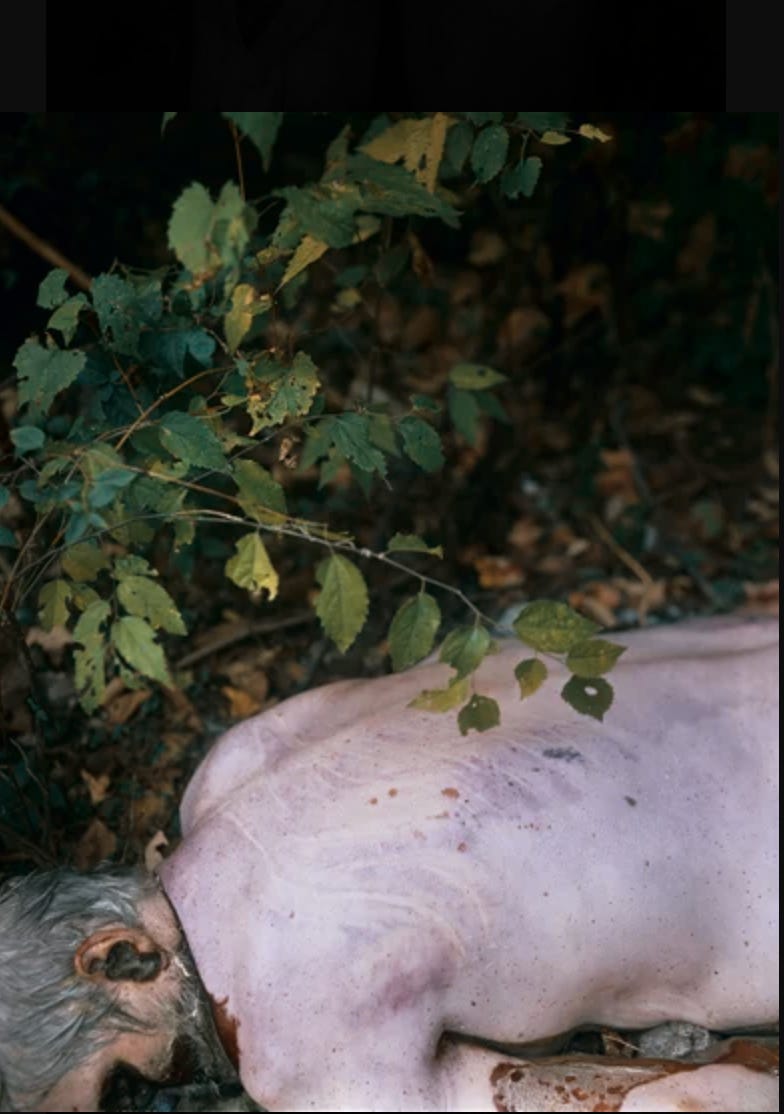
"There's a new prudery around death. We've moved it into hospital, behind screens, and no longer wear black markers to acknowledge its presence. It's become unmentionable."-
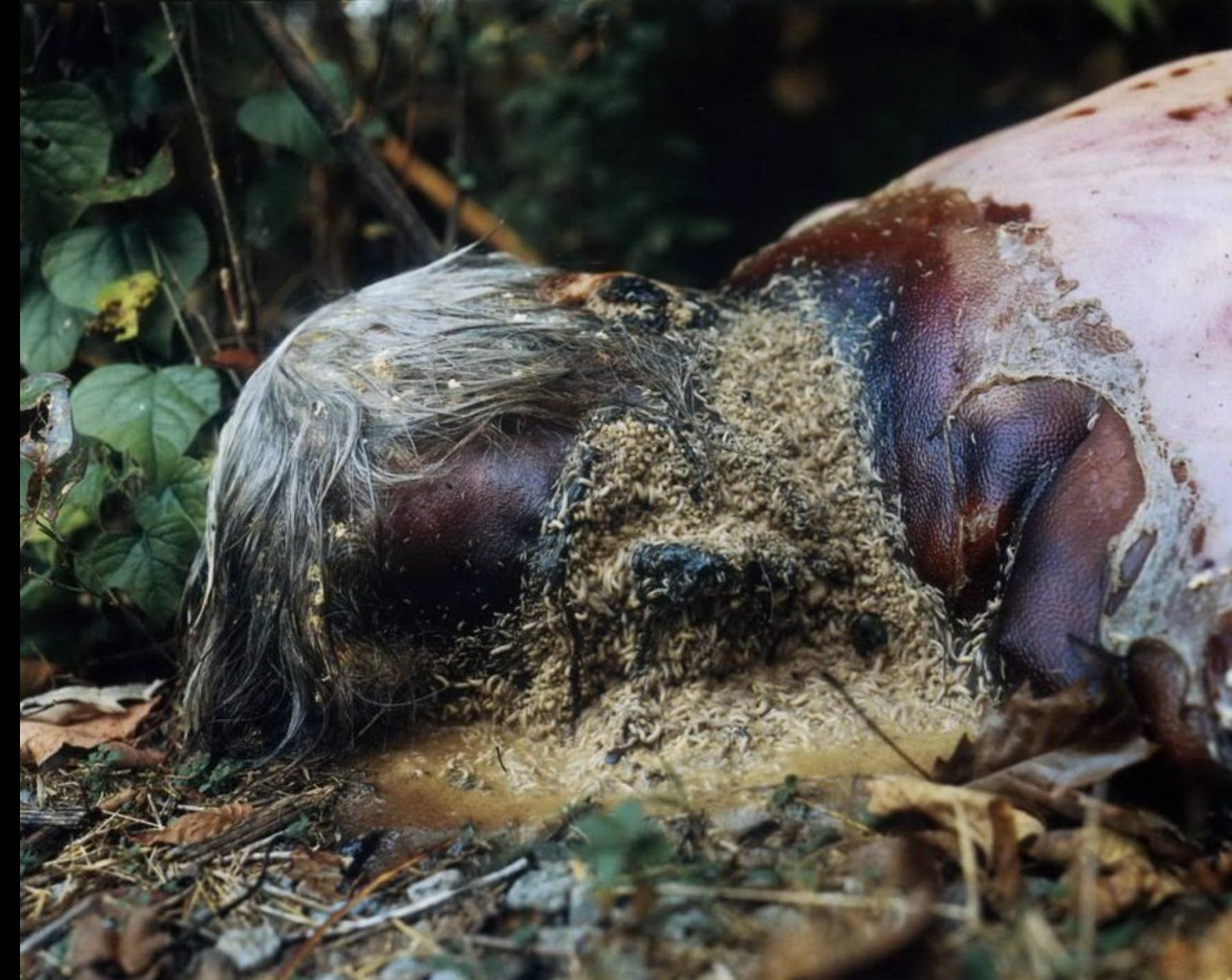
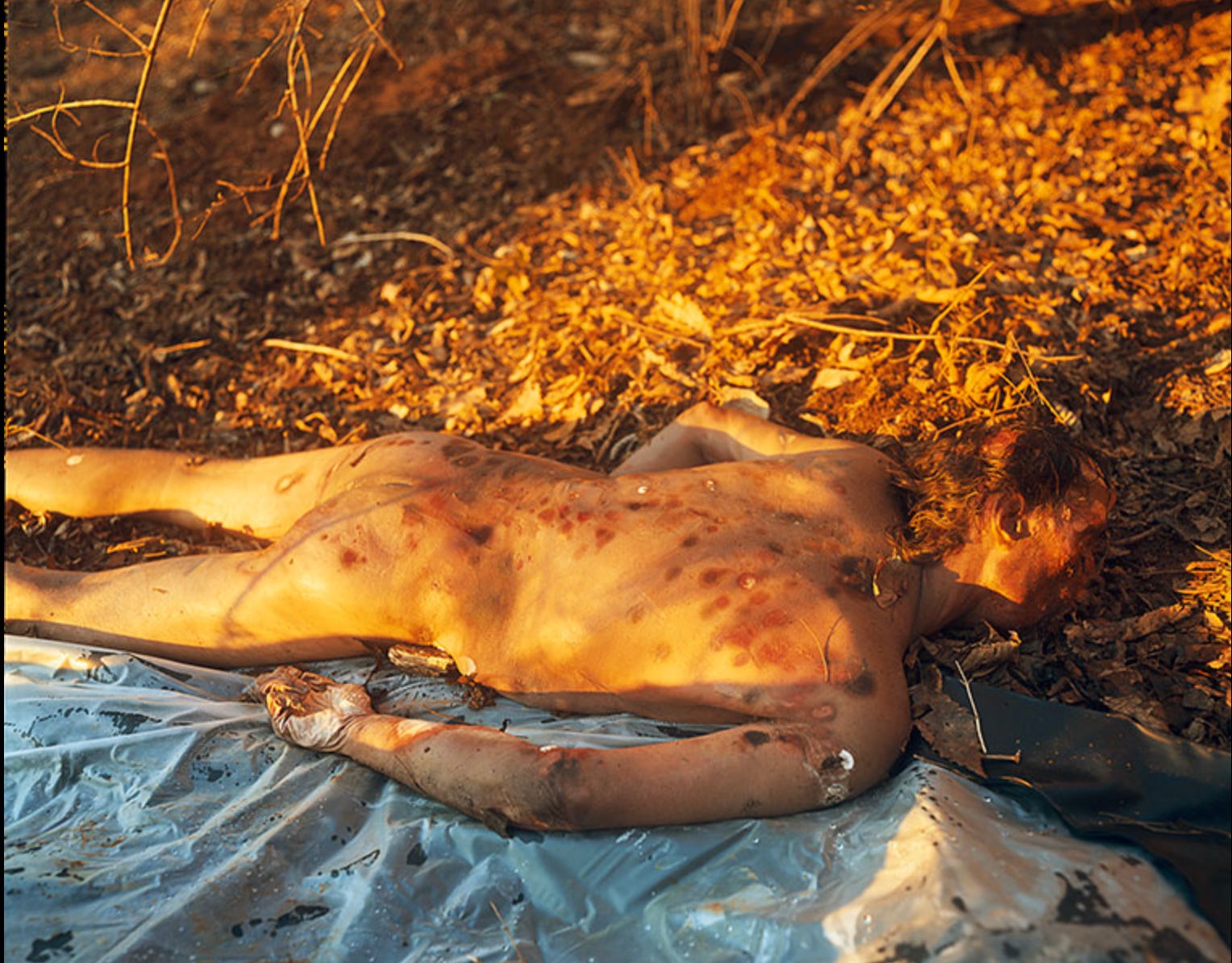
—- Sally Mann, writing about her photography of cadavers at the University of Tennessee’s Forensic Anthropology Facility. The Body Farm, as its known, is a 2 ½ acre wooded research facility, where corpses are studied in various conditions and environments to help further the science of forensics. The photos are from her 2003 book, What Remains.
I had this moment, reading Mary Roach’s Stiff: The Curious Lives of Human Cadavers, that I might want to donate my body to science after my leaving.
I was just going to be cremated anyway, is the thinking. Maybe my body could be useful in its next incarnation, something Roach hilariously calls a post-mortem career. I like the idea of doing something after death, type A until the end and all.
This means, of course, that no one will be taking my ashes out to Sydney harbor in a sweet little boat, where the captain serves espresso martinis and sausage rolls, and let’s my children say something profound and hilarious about me and my life. I imagine my family planning something like this. The tone might feel solemn enough to make people get a little moist at the edges of the eyes, but not enough to turn the mood sullen or despairing. No Poor Kim. No Taken too soon.
I think I want the last hurrah to be a party atmosphere. A kind of drunk Irish-singing, brown bar affair. With a few people who give a shit, standing around mocking me outrageously for all my weird and eccentric picadillos, regaling people with dumb stories about dumb shit I’ve done. And I’m saying this quite seriously: Please mock me in death. I am so here for it. Or I would be, if that were possible.
Then, in this fantasy, the kids would probably argue bitterly with each other over who gets to pitch mom into the harbor first - because being first is really really important in everthing we do here - before dumping the rest of my powdery bones into the water. Someone will defintitely be pissed. This is the way of siblings. Someone will say too much, something that they shouldn’t have said, and all hell could break loose. Then, off to a bar for drunk-singing, storytelling and mocking. Bonus points if someone reads my diary entries, or some of my old substack essays, out loud on a microphone.
Donating my body to science would also deprive my family of keeping me trapped in an urn, divided into sections and handed out to each child. A sort of drawing and quartering of what is left of me. That’s mom, one of them would say, and nod at the vessel on the fireplace mantel, which has been collecting a layer of sticky dust for years.
This is where I part ways with wanting to be housed in a vase. I’m terminally claustrophobic and I want to say I will be in death, too, although I know this is stupid. I don’t want to putrefy in a casket. I don’t want to be encased in ceramics. Stuck on a shelf. I also don’t want anyone to think they have to take me on adventures with them. Like I should be portable. Like my kids walking the Avenue des Champs-Élysées with their mom tucked into their elbow for one last walk together in Paris. Please don’t walk my ashes like a poodle.
Some people commission “bust urns” where a nipples-up sculpture of your likeness can sit on top of your jar of ashes. This denotes what is inside. Kim is in this jug! The bust also has the added benefit of eyes, which will stare back at your children, following them around the room at night, and generally freaking them out. This might actually be a good reason to do the bust. A super funny eternal joke on the family.
I don’t want to live I-Dream-of-Genie-style in a bottle, next to the cremated remains of all our dogs and cats, only to be discarded later anyway, as great-grands, and great-great-grands bawk at the idea of having this old timey person they’ve never met, cluttering up their shelves. Do we throw her away? Yes, eventually. The toilet or the trash heap will be my destiny anyway.
Better to be in the wind, I say.
Or, in the case of science, doing something.
Organ donorship feels more tidy and less chaotic than donating your bod to science. Civilized, if you will.
Her corneas helped a little boy see. Her heart just gave a new mom a chance to raise her baby. The benefits are immediate. The life of the dead person has brought better lives to other people. There is meaning, a reason for this person to have existed, to have given back in life and in death, and a way for them to continue on with the living while in death. It strikes me as completely satisfying that a mother who lost her child to leukemia can feel his heart beating in the chest of another child.
This is such a great post-mortem career.
What it seems you have to give up, with donating your body to science, is the kind of control we try to have in life. And this might be healthy. We have to give up the relatonship we have with our bodies. We have to come to terms with our bodies as carapaces. Our dependence on them as vessels, carrying us around. Our need, in life, to have our bodies treated well, like temples, revered for their properties and strengths. We feel our bodies are not separate. They are us. We feed them and nuture them and seek pleasure for them.
Younger gens live in a looksmaxxing culture that value physical appearance over everything else, and on the older end, we are being fed through a youth-obsessed anti-aging longevity grinder that wants our bodies looking and feeling impervious to aging and Nature. It can be a big stretch for folks, who after spending a lifetime pouring resources into your body, to hand it off to stangers to be blown up, shot, and unceremoniously mutiliated.
By and large, the dead aren't very talented...Roach says in Stiff, There is one thing dead people excel at. They're very good at handling pain.
Science is going to hurt and mutilate the bodies in its possession. It is going to treat them with irreverence. It won’t honor them at all. They are going to be hacked apart, cut up, dissected, putetrifing with maggots and blowflies in attendance, have procedures performed on them, end up hideously broken open. They will be limply strapped into vehicles, propped up with electrical tape, with researchers working aganst the clock to get the study done before the body starts moldering in the heat. The corpse will wear a diaper, it has to, because, as Roach writes: Life contains these things: leakage and wickage and discharge...We are biology. We are reminded of this at the beginning and the end, at birth and at death.
And this means that bodies in science handle the pain and the indignities that humans couldn’t tolerate, in car crash experiments, in anatomy and surgical lessons for young doctors, in plastic surgery research, in fields where insect development is tracked prodigously so detectives can establish more accurate times of death in criminal cases. These bodies are often chopped up, one research institute gets the legs, another gets the head, one gets the brain, another the hands.
There are only about 20,000 whole body science donations every year. They mostly have to be set up in advance of illness, and even this is a hard club to get into. Die the wrong way, have too much trauma to the body, and the researchers won’t want you anyway.
There is rejection and gatekeeping, even in death.
And so there is the inevitable objectification and distancing from the body itself.
This is no longer Kim Foster the human with worries and ideas and people who love her, whom she loves. Instead, this is some old lady’s head. Someone might stop and wonder what life had been like for this lady-head, but probably not. Because the system is set up for distance.
Dissection and surgical instruction, like meat-eating, require a carefully maintained set of delusions and denials, Roach writes. Physicians and anatomy students must learn to think of cadavers as wholly unrelated to the people they once were.
Still, there are cracks. For me, hands are hard, Roach quotes Canadian surgeon, Marilena Marignani, because you’re holding this disconnected hand, and it’s holding you back.
But what still holds people back from donating their bodies to science always seems to circle back to the lack of control. Someone donated their remains for science, a Reddit commenter wrote: The body was sold to the ATF, and they used it in a detonation of explosives to study the effects of the blast. The children learned about it later.
And then, the commenter added this, underscoring the need for post-mortem control: I hope to be cremated and buried at sea. I am relying on my children to make this happen. They don’t listen to me now. I doubt they will after I croak.
Death is, by definition, the loosening of all our controls and offering ourselves back to where we came. It is pure letting go. It is the most letting go we will ever do. We fool ourselves that death is neat, and leave the ugly stuff to the morticians who are suturing up our floppy anuses so they don’t leak poop during our viewing. Or the crematoriums, who keep the secrets of our body’s last moments, the charring, swelling, splitting that happens as soft tissue eviscerates, burning away everything but the exposed spinal column and clean white bone.
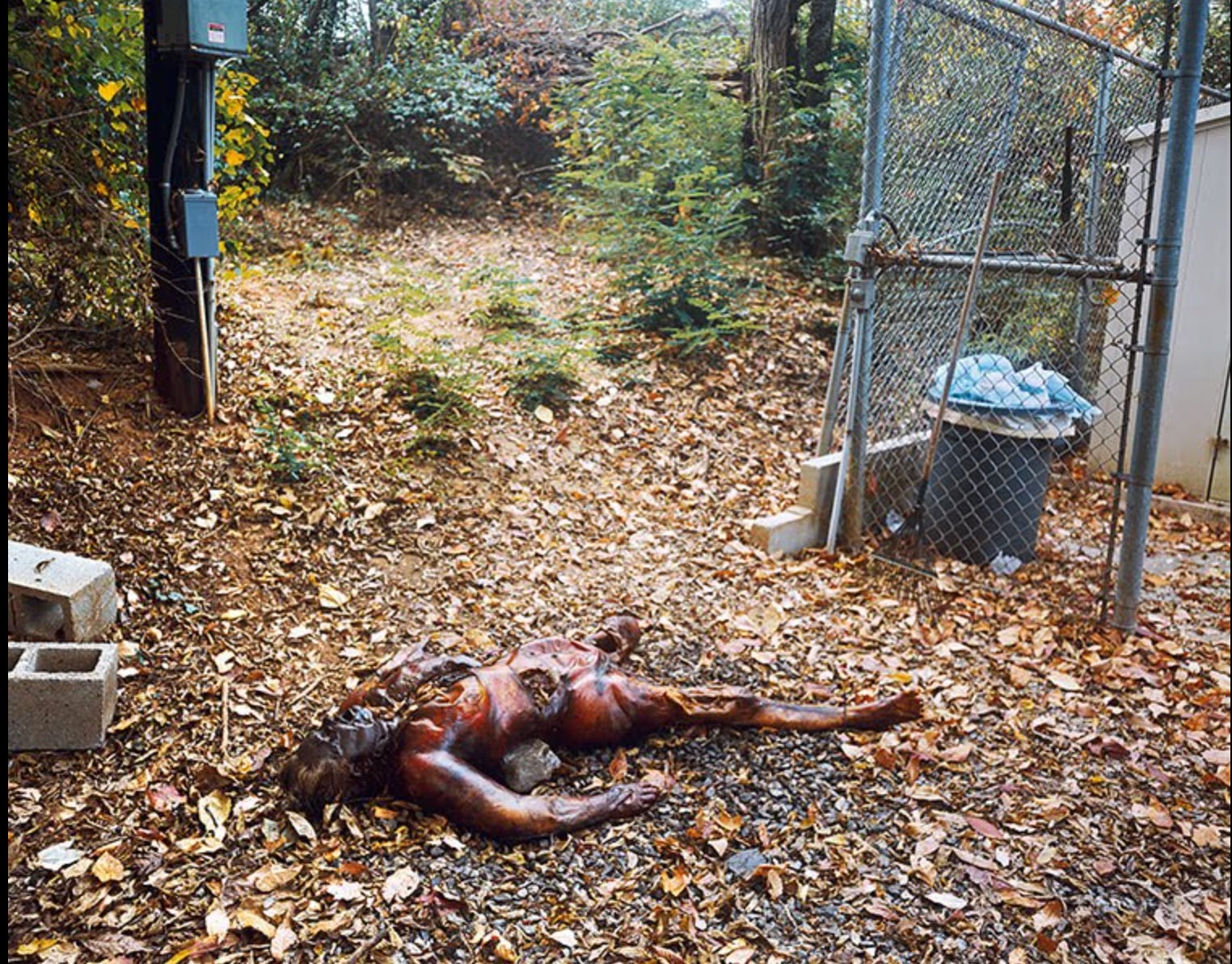
Sally Mann, the photographer of these photos, talks a bit about death after shooting at the Body Farm.
In a documentary about her life and work, Mann walks the corpses and touches them noting the bright orange on the heel of one transforming body. She touches it with a gloved hand and feels how the skin and the fluid under it undulate and move, how the skins on the bodies have formed alternative textures, like fabrics and leathers, as they change. How they occupy a new space that is not really living, but living differently. How they are not to be pitied. She uses words and phrases like organic, vital, skin-like fabric, mummified, undulating, moving. I love how she sees cadavers as works of jubilant and vivid natural art, decay and breaking down into parts as part of living.
I don’t care what they do to me, she says, looking out toward trees, leave me for the buzzards, let the little foxes eat me. Put me out there, and let me nourish those hickories. There’s not a lot of me, but there’s enough to probably support some earth process.
Unlike Mann, the journalist Roach takes a more funny and rational approach to cadavers. Her work is constantly juggling reverence for the living body with the discomfort of its post-mortem changes, which then translates into a kind of absurdity. Humor, and leaning into what we can’t dictate, is appealing. The corpse, for Roach, is the ultimate in the absurd.
Your limbs are floppy and uncooperative, she writes. Your mouth hangs open. Being dead is unsightly and stinky and embarrasssing, and there’s not a damn thing to be done about it.
What Roach and Mann, and their various takes on cadavers, has taught me is that planning our own memorials, our post-mortem jobs, obsessing about the particulars, is a fools errand. Those moments are for the living, whether they tell jokes about us, or sob relentlessly, or play music we didn’t choose, or make people come see us laying in a casket, with our buttholes properly sutured. That is for them.
What is for us, pre-cadaver, is to let go. To stop trying to control every outcome, to stop trying to exert our influence on the world, to consider that our time here is temporary and this is okay. To understand that we get no benefit or joy from trying to control what happens after. That leaving is not necessarily the worst thing.
It kind of doesn’t matter, to you personally, that your death fulfills a job. Or that science is advanced by what people learn using your body. It doesn’t matter to you personally, if you are composted in the woods au natural, or eaten alive by a tide pool of dungeoness crabs. Roach, afterall, writes that crabs apparently love eating people as much as people enjoy eating crabs. But if you donate your body to science, it will most likely be used for dissection in anatomy labs, some 80% end up there, Roach tells us. A student could make fun of your bushy pubic hair, your flabby tummy, and there is nothing you can do about it and honestly, who cares anyway? Your dead, bushy pubs are friggin’ hilarious.
I toy with the idea of donating my body to science, but I also toy with the idea of including a brief letter of my history, of who I am, of who they will be working on. I will crack jokes about myself, in this letter. I will be witty, smart, and endearing. The meta-message will be that I matter and mattered to the world, a sign they should not waste me frivously. In the same way a pig from a pasture-raised local farm might be more mindfully processed and consumed, than a slab of plastic and styrofoam-wrapped pork-flesh in a supermarket. I’m the meat. The letter will ensure I’m treated like the pasture-raised special being that I am.
Still, I have to wonder: Why do I need them to see me as a person? As a whole human? Why does it matter to me that I’m more than a flesh bag? Or that I am used well? Can’t I exist without context? Can’t I suck at my post-mortem gig? Why do I have to work so hard to be special, even in death?
Roach, at the end of her book, reminds us that sometimes our wishes are a burden to the living. She recounts the story of her mother honoring her father’s no-frills wishes. He wanted to be cremated in a pine box with no memorial service. She honored these things, only to be inundated with criticism about not having a service for extended family and community. He was a public figure and the community needed to say goodbye, too. His ashes, stored in her closet for years, also felt wrong. They haunted her. It finally became too much and she had his remains buried, as per her Catholic beliefs. She was at peace. The needs of the living always trump the needs of the non-living.
Sometimes we have to let go, and let the living do right for themselves. Even if it isn’t the eternal rest we imagined.
Thank you, as always, for reading. xo Kim
____________
END NOTES:
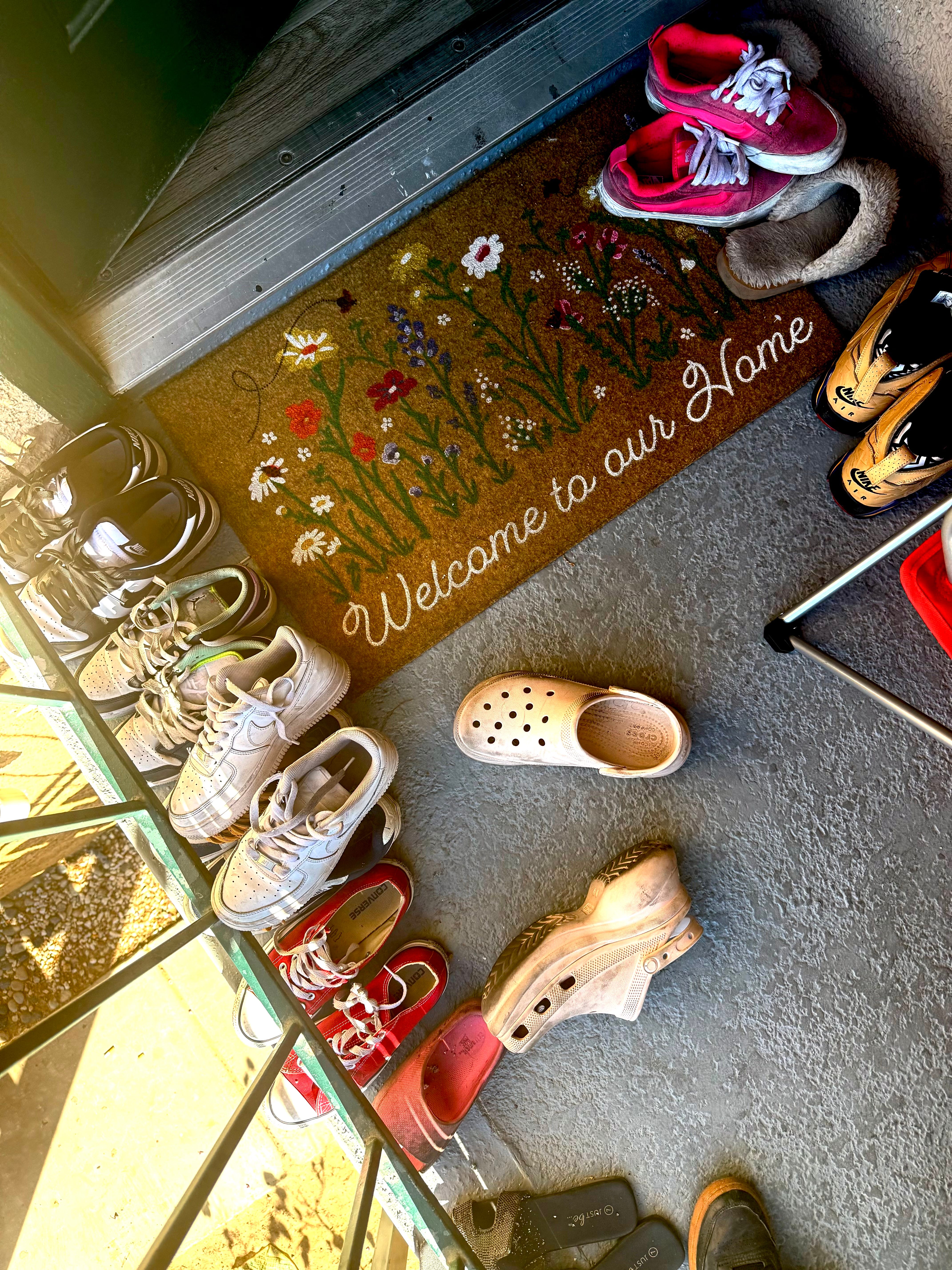
I want to say thank you to everyone who contributed to the GFM for our former foster daughter’s family. They moved into their new apartment, have paid their rent to September. It’s lovely. Lots of windows, light, terrace, even their own little laundry room inside the apartment, a necessity for four kids.
Dad doesn’t have a lot of financial guidance, so we decided what the kids needed most, prioritized those things, getting his car registered and insured, saving up weekly from his paycheck, so he isn’t ever short on rent, getting a real bank account and not using Cashapp for everything. It’s mind blowing how easy it is to get used to scrambling and never having calm. He feels the stable ground and he wants it to continue.
We talked about wealth as stability. That being rich is being able to fix your car when it breaks down, not having the finest, newsest, flashiest. We talked about things people do when money is scarce, like short-term thinking, and ways to combat that. We talked about getting out of the scarcity/poverty mindset, placing boundaries on problematic people that threaten to destabilize them, and why DV is never an option for solving disputes, because it’s a poverty mindset and this is how you lose your kids in the system and imperil their childhoods. We talked about buying a home in the future, and what he needs to do to make that happen. We talked about college for the kids, as former foster kids they will get full rides to Nevada colleges.
This is all new-ish territory for him, but he wants to do right for his kids. I’m very proud of dad. And he is beyond grateful to all of you. The kids are happy and so much more calm and settled that when they were in care. And dad is proud of himself. He took me around the apartment and proudly showed me how he is trying to make the kids feel special and loved. He has added cozy touches to make it feel like a home. He has them doing chores, makes them remove their shoes before going inside, cooks dinner for them most nights, and the apartment is spotless.
Last night I was at their house, and his mama cried in my arms with joy about your generous gifts. She lives in the same complex and is helping with babysitting. She tried to take in all the kids while they were in care, but she couldn’t afford to pay the bills and DFS pulled the kids. (Paying foster parents is less complicated than paying families to care for their own. Frustrating.)
I’ll continue to work with the family and support them, but wanted you to know how you all made this happen. Thank you. Truly. For the donations, the prayers, spreading the word. Thank you for caring about people. For taking a chance on on folks who often are left to flounder invisibly. This head start matters.
Anyway, you are the antidote to this shitty shitty world. You are light-bearers. I’m grateful for you all.
I am so happy that the family has stability till at least September. I'm sure he won't do this perfectly but -- he's trying and it's the best thing ever! It's the social worker in me that feels so incredibly good about seeing someone like this family step out of that awful cycle they were in.
The other part of your story was so humorous and true! When my mom's oldest sister and best friend passed away, her kids got her cremated and had my mom pick her up at the crematorium. Mom put the bright blue plastic box in a large JC Penny back and put it in the back of her SUV. There was a plan for the next year to have her ashes interred with my grandparents. Mom was SUPPOSED to put the ashes in a closet in the house until then. She didn't. No one knew it.
About six months later, I had to borrow mom's SUV while my car was in the shop. It was parked in front of our apartment, that was gated, so I didn't really think about locking the car. It was the late 90's. That night I was awakened with a blood curdling screams of several young people. I lept to the window to see the back of mom's car open, light on and three screaming kids running down the street. Like, really screaming!
I put on my clothes and ran down the stairs of the apartment to find aunt Betty strewn across the back of the car and a little on the parking lot. It looks like the kids had seen the JC Penney's bag and thought they really had something, opened the bright blue box and stuck in their hand. Directly into Aunt Betty's ashes! I laughed so hard I cried. My daughter wasn't as amused as me. The next morning I vacuumed up Aunt Betty, put some of her back in the box and took her into mom's house on the way to work. No one, including my mom, ever knew that my aunt went on one last wild ride! Thanks for reminding me! Kelli
When my wife asked me what I want done with my body after I died, I told her it didn’t matter. I won’t care. She has similar sentiments, but I think we’d both like each other to decide so the living don’t have to make the decision.
I used to work security at Harvard Medical school. Sometimes, in the wee hours of the morning we’d hear a call on the radio to assist with an “anatomical donation.” Harvard was quite respectful of the donations. When the bodies are no longer needed, the cremated remains are offered back to the family, or Harvard will cover the cost to bury the remains at Pine Hill Cemetery a bit north of Boston. Once a year the medical school and dental school conduct a memorial service for the donors to honor their gift.