

Quiet Riot
Poverty is suffocating, but life happens anyway.

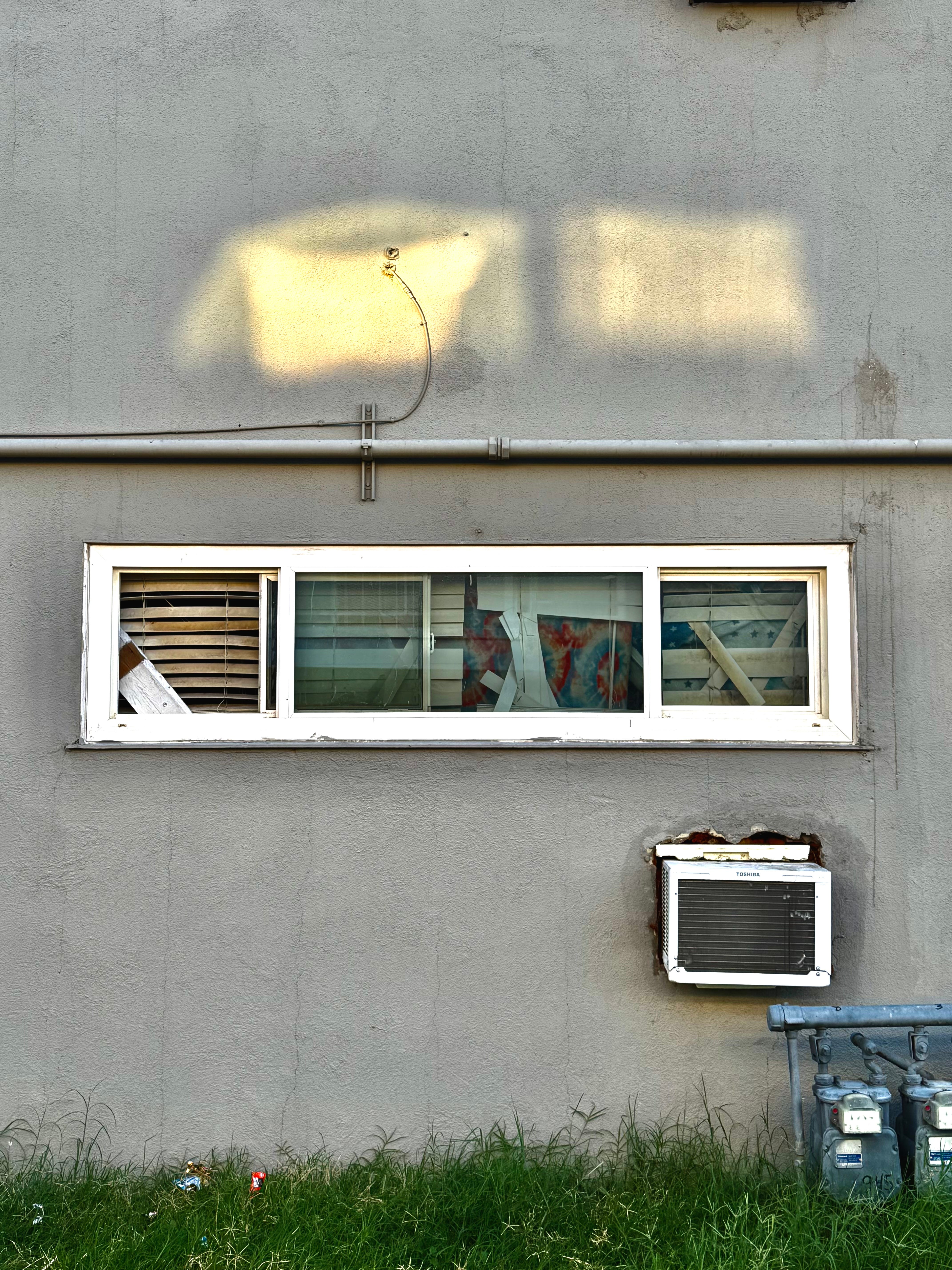
The other day I was out walking in a nearby Las Vegas neighborhood, called Naked City. I had met a family Halloween night, when the neighborhood was giving out complete shelf-stable meal bags, and I knew they could use some supermarket gift cards we had leftover.
Naked City is tucked behind the long shadow of the Strat Hotel, Tower and Casino, flanked by Sahara Avenue, Industrial, and the North end of Las Vegas Boulevard. Naked City is one of those iconic Vegas neighborhoods simply because it was built in the 30’s, and it has history, and because it has a history, powerful lore has been ascribed to it.
So much about Vegas is about myth.
When we first moved here, I had been told that a particular historic mansion on 6th street, downtown, had been a place both Elvis and Liberace stayed in when they performed here. It was such a rich story, you could imagine Liberace flowing down the massive staircases, and Elvis, belting out Burning Love acapella in his socks and boxers under elaborate and imposing chandeliers. This turned out to be a myth, but I couldn’t stop insinuating the connection when people came to visit. “People say so-and-so lived here, but we aren’t sure…”
That mansion has since been torn down. History only goes so far here in Vegas.
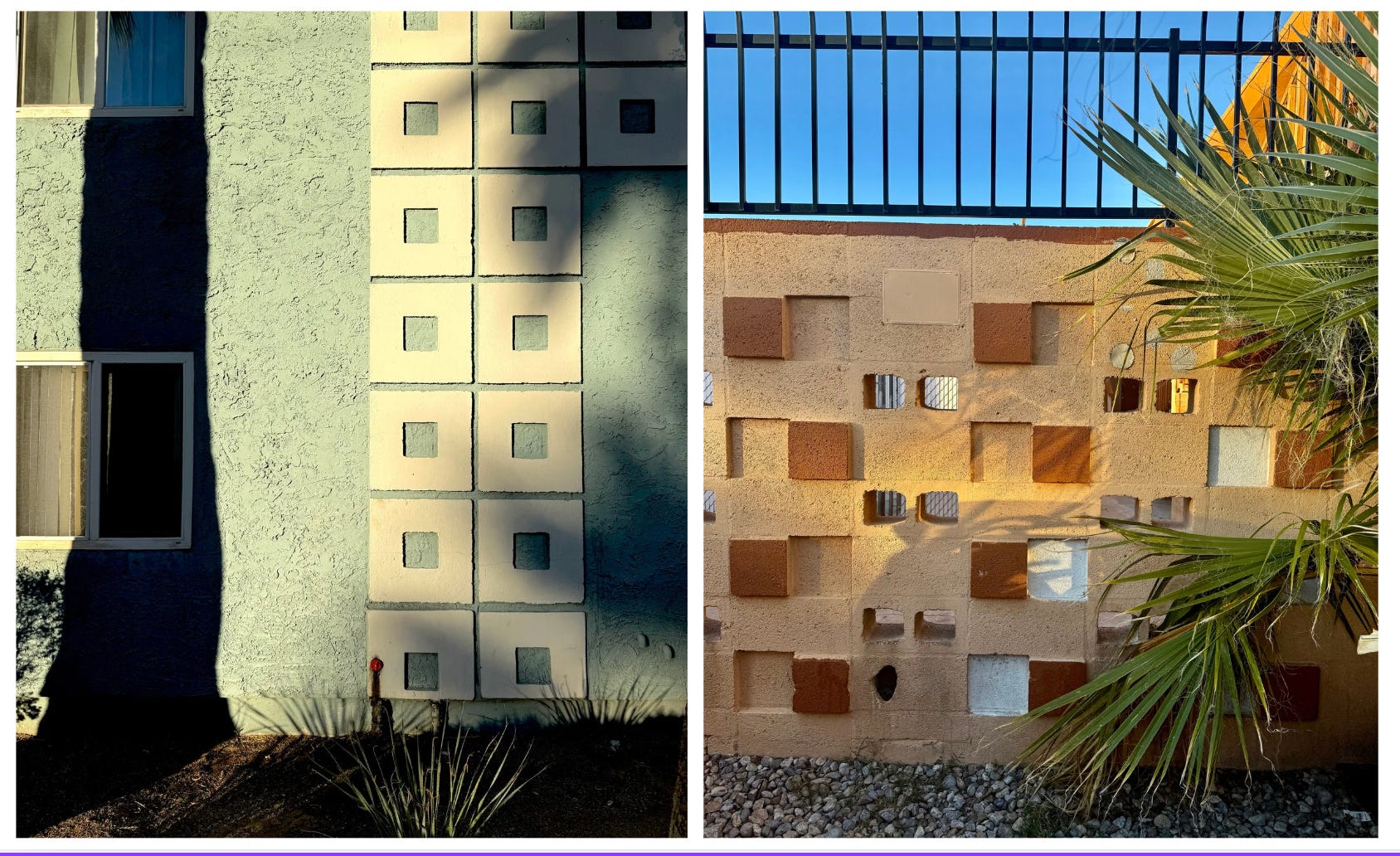
Naked City abounds with story. In the 50’s and 60’s, Vegas Rat Pack hey day, celebrities stayed there because it was close to the Strip. This attracted the show girls, lore goes, who flocked to the pools and high life to sunbathe topless. Old men, who have lived a lifetime here, still swear they remember going to peer out from the bushes and mid-mod lattice work to watch the girls peel off layers of clothes and position themselves on chaise lounges to sun themselves topless.
Show girls never have tan lines. Which only feeds the imagination. And the lore.
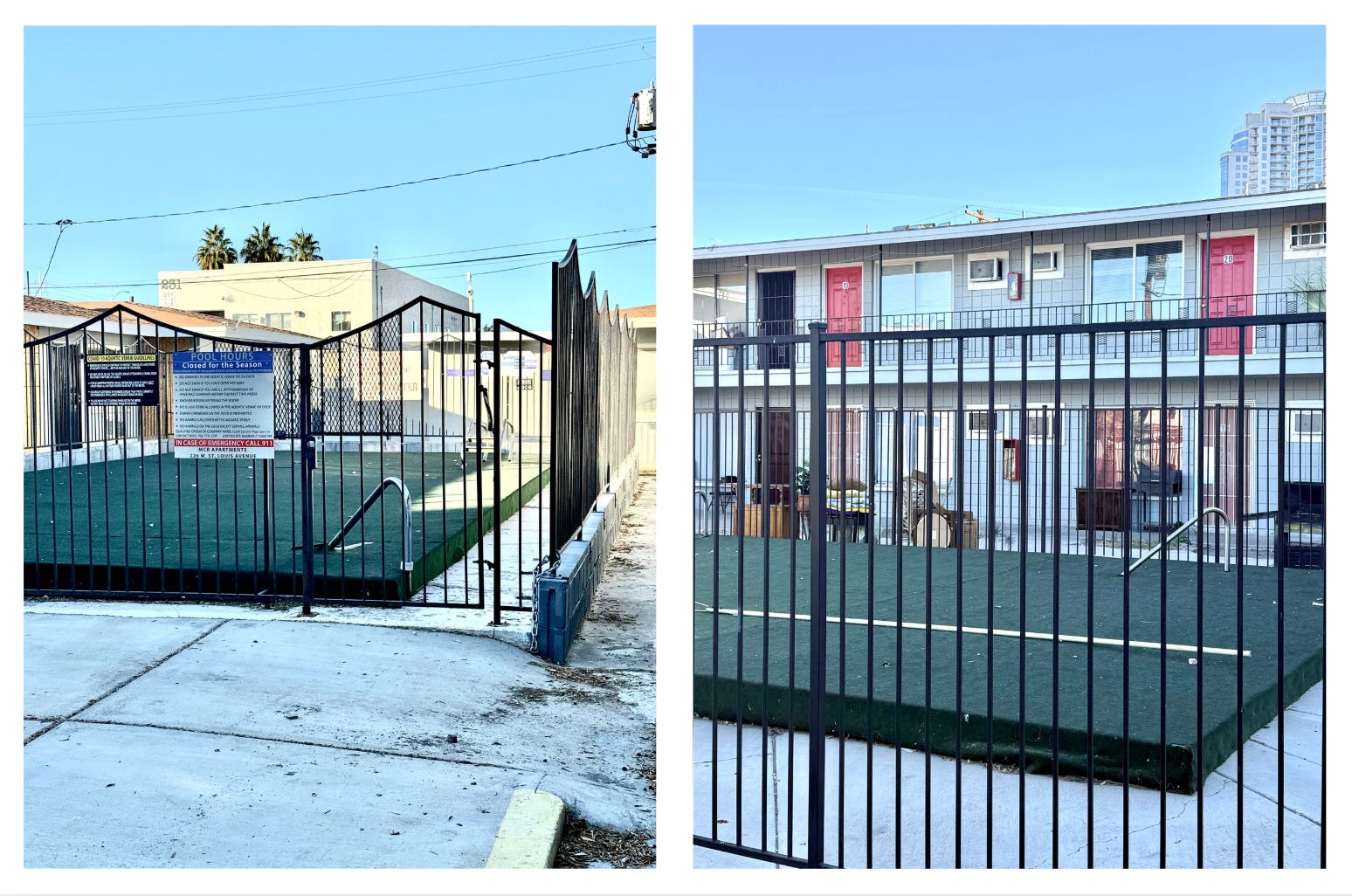
Then, as Vegas changed, Naked City changed. By the 70’s and 80’s, people started warning tourists not to go there. The buildings were forgotten, landlords stopped making improvements. Crime and drugs worked themselves into the cracks and expanded to life-as-usual. They took out the pools and laid cheap fake grass over the top, but did such a thoughtless job that pool after pool, still has silver grab bars poking out of the grass, like absurd, useless statuary. Pool signs are still up, as if someone might go for a swim.
It is, I think, a physical sign, an anthropological signal, that no one is thinking about you. Thoughtlessness abounds.
And yet….

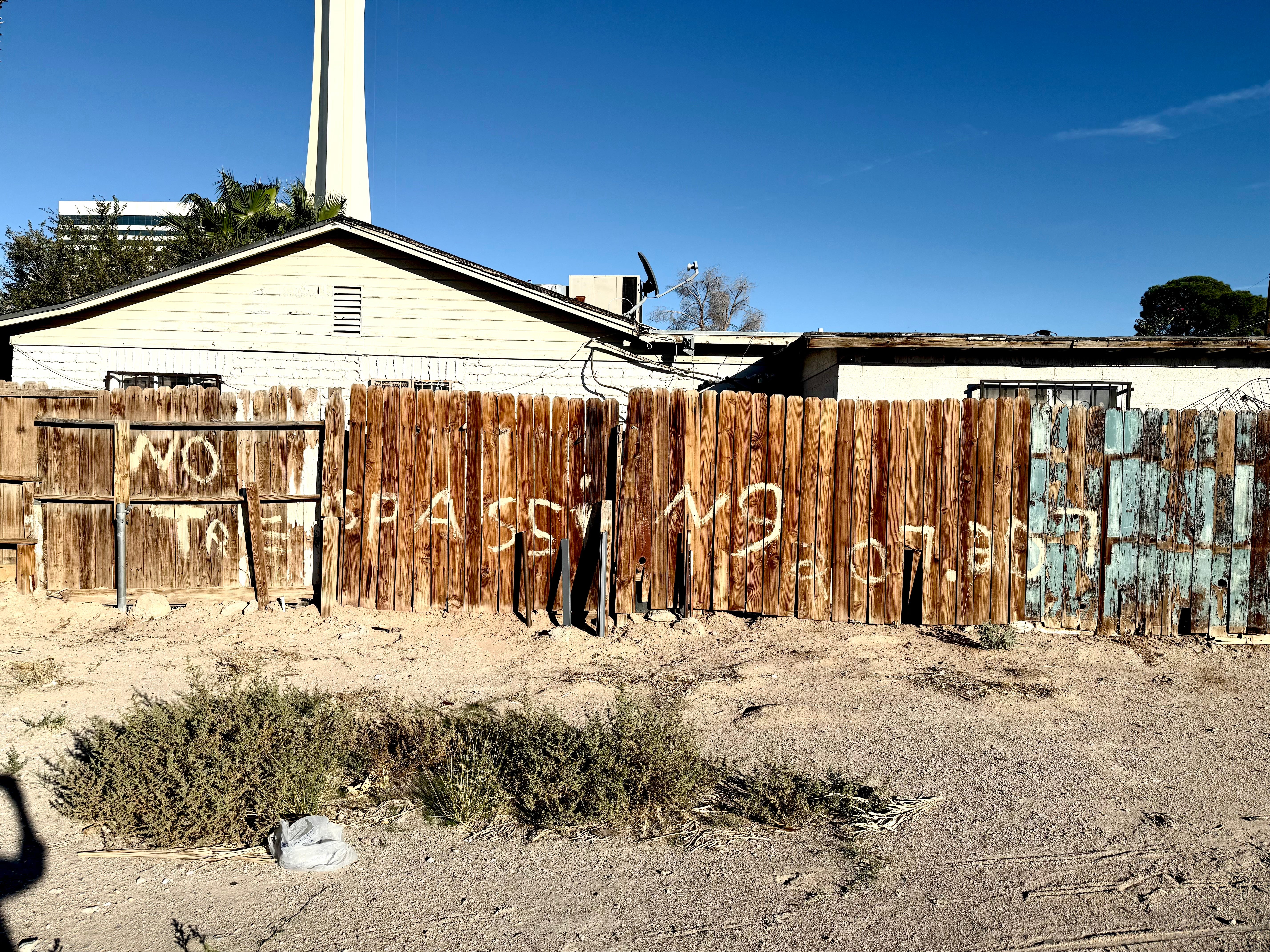
When I reach the house of the family I’m visiting, I’ve noticed two conflicting realities in Naked City. (1) The disrepair that landlords and the city have left for people. And (2) the lives that people are making for themselves, which stands as a kind of quiet revolt and affirmation.
You have to look past the chain link and the No Trespassing scrawled across fences to see it, the understood artifacts of poverty. But when you do, you might notice a group of Mexican elders, having an afternoon Coke around a table in the common area of their apartments. They are laughing. The area is thick with palms and Bouganvilla. Shade is a prized commodity in the desert. They are rich with shade. A man with a cane is standing at the end of the table, regaling them, he is waving his hands around. They cannot take their eyes off him. They are having fun. I want to join, but of course, I won’t bother them.
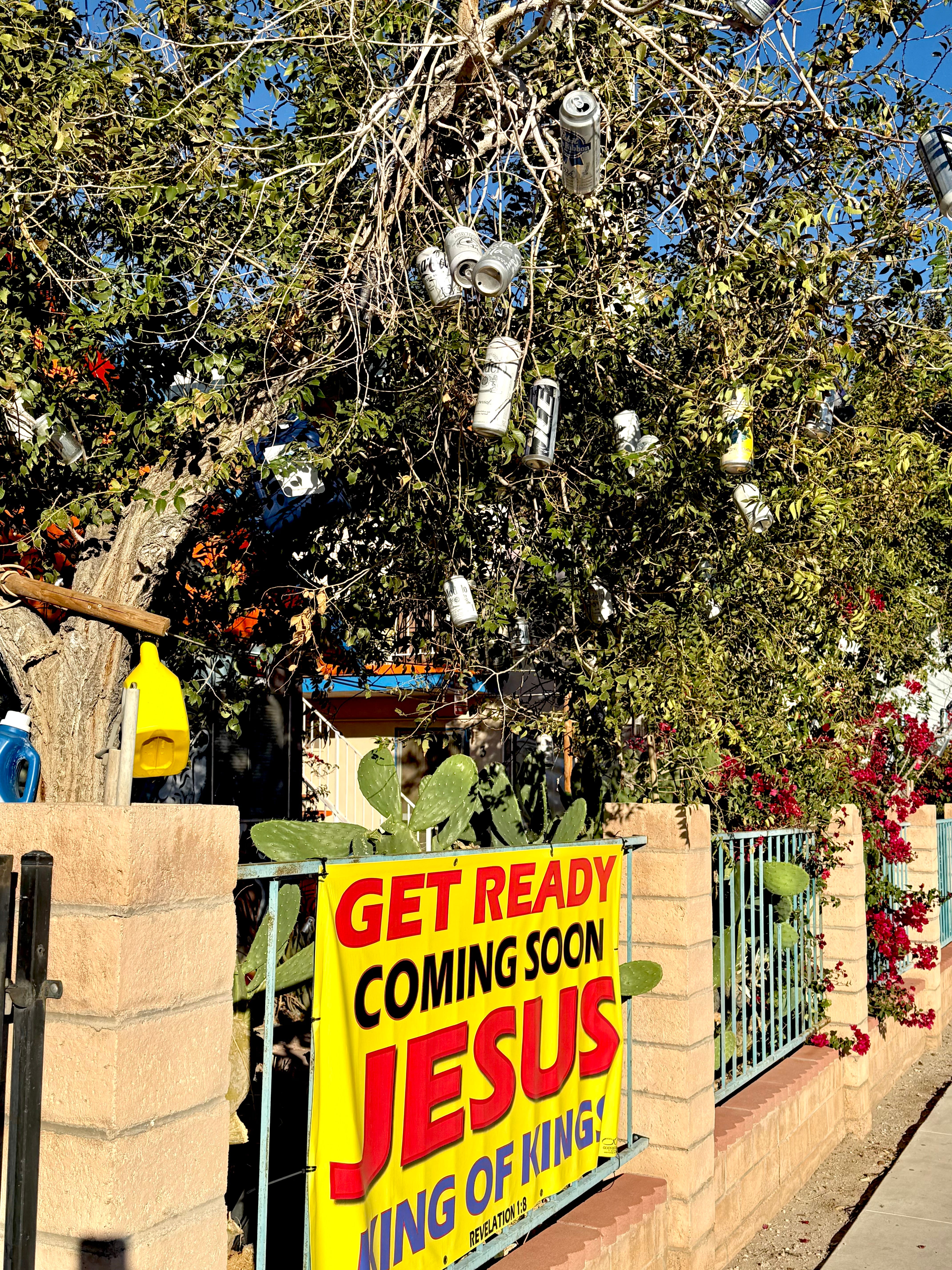
I see a patch of land where small feeble houses are strung together with twinkle lights. They live communally, I think, but I don’t know. Empty beer cans decorate limbs as if they are Christmas trees and every Coors and Corona can is an ornament. They socialize a lot? Extended family? Partiers? Maybe all of it? Their fence is covered in Jesus signs. Their houses are covered in Jesus signs. Their railings are covered in jesus signs. If the number of Jesus signs is the amount of love they have for Jesus, then they really really love Jesus. Good on them.
I see a tree on a front porch, thick with lemons. There are looping strands of colorful Papel Picado adorning porches and terraces, a Mexican folk art tradition that dates back to the Aztecs, when paper came from processing mulberry and fig tree bark, and now can be purchased at a hacienda store. On a second story terrace, a grill, nothing but a basic metal charcoal grill, reminds me someone likes to cook burgers and chops, maybe a chuck steak when the money is right. One house has a barber’s chair out front and a sign. At another time of day, do young men gather for a trim and tell their own stories that may or may not be true?
People, like neighborhoods, have their myths too.


Kids get picked up at the bus stop by city workers in matching royal blue shirts who work at the Stupak Community Center, an active, bustling building with Lifesaver’s rainbow signage wrapped around the front entrance. I think this might be their cheeky way of signaling their LGBTQ+ acceptance, but it also could be just Lifesavers branding. Who the fuck knows? There is a library, after school programs and cooking classes. Someone is paying attention after all. There is a small park where kids have thrown their backpacks and have run off to greet friends. I leave the family’s house. This is where I run into Daryl.
He is pushing his stepson, Darius on the swings. Darius is friendly and seven- years-of-exuberance-old, and sees me as the perfect person to strike up a conversation. Daryl is less sure and more guarded. He lets Darius talk to me, but he doesn’t say much himself.
Darius spills their story. His stepdad is his dad. Got it? His mom and stepdad met in the county jail. Daryl has to laugh, he can’t help himself. “Drugs, he says. I got into sellin’ drugs.” And then he tells me how he and his now wife, who have been together for five years, were both in county jail. They talked to each through the vents. They fell in love this way and met on the outside.
“We heal each other,” he says.
When Daryl starts feeling more comfortable, I ask about the loss of SNAP. Daryl is a big man, shaved head, large arms. “The white man is fucking with me,” he mumbles. He isn’t wrong.
“I can provide for my famiy, I ain’t scared.”
Before we say goodbye, I remember I have an extra $50 supermarket card in my bag. People have donated and I carry them, just as I carry my phone, water, bandaids, wet wipes and Narcan. I hand it to him. It’s the first time I see his face melt into some kind of undefinable Mona Lisa emotion. Darius doesn’t care. He is bolting down the block, talking to anyone who might be listening.
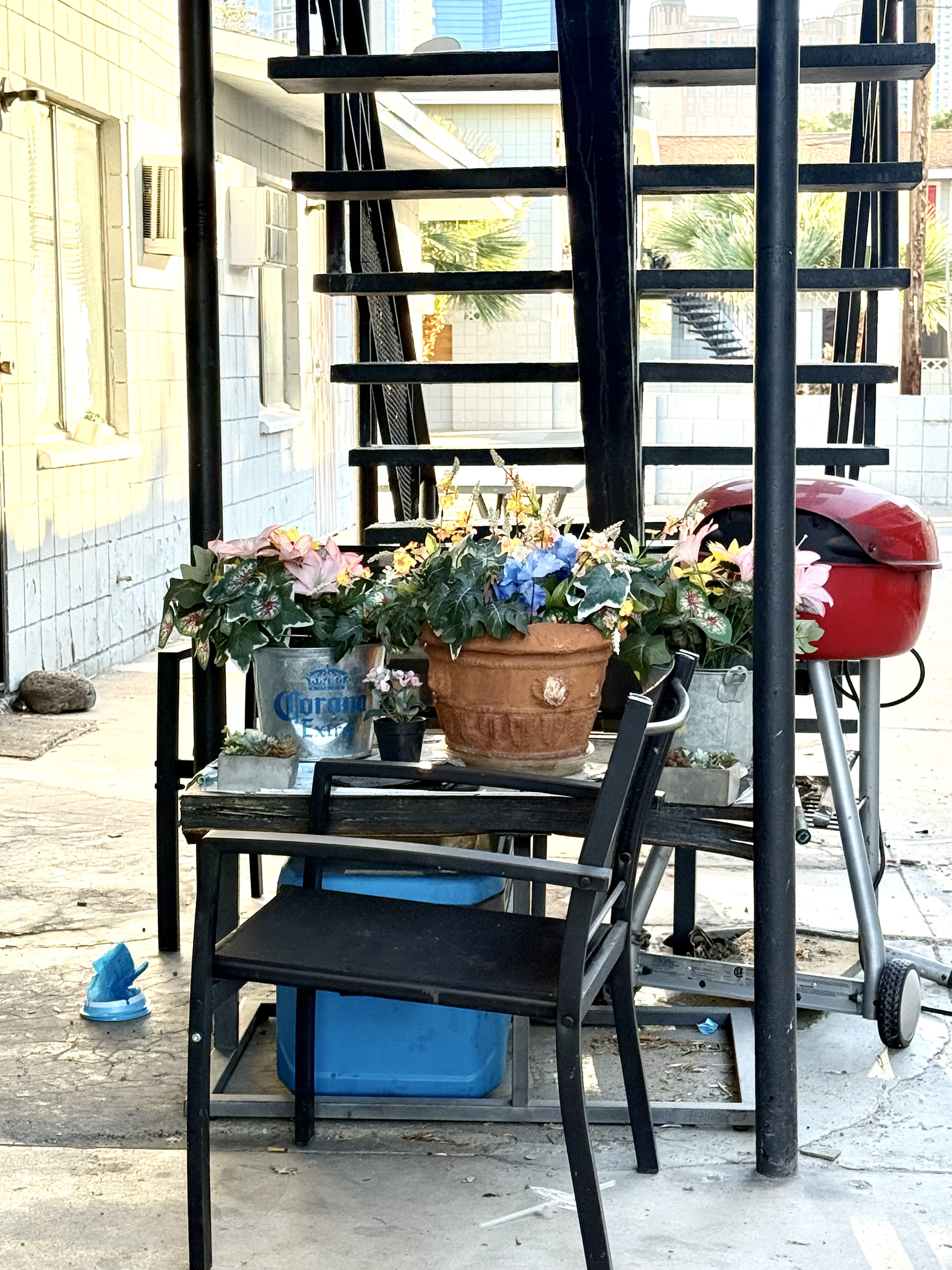
Life is the details. Thoughtfulness abounds there. People can struggle and still tend to flowers in a pail. Prune a tree that gives lemons. Use a shitty Walmart grill to give good food. Maintain a garden that promises bounty or a little happiness. Tell a story in a make-shift barber chair, so people feel surrounded, gathered. Drink cervezas in the cool desert night under a halo of lights from The Strat. Fall in love through an air vent when you are at your absolute bottom. Gather your old friends around a table, without the need for food, to nourish them with a big fat tall tale, that may or may not be true, but reminds us of ourselves anyway, and deserves a re-telling. And another after that.
There is crisis now. But there is also actual living. And stories about Elvis that won’t fade. And somehow, this will, I hope, help get us through.
Hold on to what you can.
Thank you, as always, for reading. xo Kim
________________
END NOTES:
Sorry, I’ve been behind responding to comments the last couple posts. Excited to have some time for that this weekend. Talk to you there!

This was a perfect post, and the high point of my day (so far). It’s an empathetic picture of a neighborhood that, although impoverished, has more potential for success than a suburban tract of upper middle class houses (full disclosure — I live in one). Of course it needs help, but not in the typical way that politicians do — make cosmetic changes, and throw (not enough) money around, so as to get a good photo op.
However, it was the writing that got to me. It told a story in such a way that I could hear the laughter and smell the delicious food on the grill. It described a hard life, but a good one. One where community and government could intersect if only the residents were listened to. Really listened to.
I was happy (and changed) by reading it. Hopeful that there is a future that can be beneficial to everyone.
Sure, I got more. Glad you asked! For the same reason--learning about my hometown--I spent some time in and out of Naked City between 2019-2022. Things have changed since the 7-11 at the north end was demolished. People say that removed a magnet, and I can attest to this having done a 4am U-turn that illuminated in my headlights for an awkardly long moment some inside-appropriate things going on outside. It was enough to nonpluss even a nonplussable amateur ethnographer like me.
If my one experience of a weekly then was representative of the larger set of weeklies, then everyone in the area is either smoking or dealing fentanyl while 'business managing' a few women entrepreneurs so to speak. Literally everyone in that weekly was in the game. I've met other people, however, who were employed and who were there to live and nothing more untoward, at least for awhile. In Naked City, as in all of Las Vegas, it's the transience that factors most heavily. Transience and precarity and codependence and the hustle and the lick.
Being right smack in the center of town along the busy thoroughfare of the Matrimonial District, as I like to think of it, apparently made it necessary to establish neighborhood-wide police-prophylactic protocols. It was safe to assume back in 2022, for example, that there were eyes on you from nearby windows for a once-over assessment at least when you walked into view on close nearby streets and alleys.
"Hey, I'm at Luv-Its" my friend Ray texted me back then. "I think I saw your friend M__ go into the apartments across the street."
"Ur friend is here and hes fkn staring at our place" came a text from my friend M__ a moment later
"Ray, stop staring. You're in Naked City."
"Oh my bad," replied Ray.