

Living in The Objecthood.
On the Care + Curation of Our Many Cherished, Useless + Abandoned Things.

I’ve replayed the day over and over. It’s stuck in my brain on repeat. The day I moved my mom from her assisted living apartment to a small nursing home room, the size of a hospital room. Her final life move. The beginning of what would be her end. A huge downsize in so many ways.
I got her to the new place and went back to her old apartment to make sure we got everything she needed. I walked in and saw everything that wouldn’t be going with her. Furniture, file cabinets, baubles, treasures, antiques, momentos, framed photos, office supplies, jars of safety pins and paper clips, a room full of her things that had so much meaning, and also, little meaning at all. Without her what did all these things mean? Without her, they had been stripped of their context and value. They were meaningless.
My first impulse was to run.
I wanted to run away from it all. Shut the door and walk out. This is not what she wanted, of course. She wanted me to carefully pack up everything she owned, had collected throughout her life, and send it back to our home across country. She wanted me to sort through it, with love and care, as she would’ve done. She wanted me to take each piece of her physical life and keep some things, give some to the kids to remember her, sell some of the more valuable items, add some of her furniture to our furniture, her physical life mingling with our physical life.
But I couldn’t do it. I was overwhelmed. I ran. I closed the door behind me. I paid someone to take it all. I have no idea what happened to her things after that. And I have deep regrets about my lack of care for her things. I think that I dishonored her. Maybe because she was the sum of her things? Her things didn’t just matter to her, they were a part of her. Handling them with care was handling her with care.
I failed at that. And so I replay it, mostly to torture myself. As you do.
My mom cared about her things. She took good care of them. The things she had lasted years, still in their pristine, near perfect conditions. She had been dirt poor from a profoundly alcoholic home, always on the bring of precarity. Things meant stability. Proof that she was not that poor, powerless kid. Things mattered to her.
Mom inherited almost nothing from her parents, because they had nothing. But the death of relatives on my father’s side, who also had little, brought tension and anxiety. When his parents died, and his large family of brothers and sisters descended on the house to take things they thought they could profit from or that they could cherish, it killed my mother.
The very act of sorting through the dead’s possessions asked the question: Who deserves that cup? What did you do to warrant getting the truck? Who should get Dad’s tools? The better carpenter who will use them or the more dutiful family-oriented sibling? Who gets to live in that house now that its occupants are gone? What is fair if you are the problem child who created all the family havoc and now you want your slice? What if you are the sibling who needs that object more because you simply haven’t done as well in life and that object will help?
The very act of scavenging after the dead filled her with anxiety and a looming sense of injustice. That dad would be overlooked. That someone would get over on them. The story that got stuck in her craw the most was about my grandfather’s little wooden row boat. Grandpa and his best friend, Jeb, used to go fishing on the boat on the weekends, for food as much as fun. Dad suggested giving the boat to Jeb as a kind of tribute to their friendship. But a sibling swooped in, took the boat and sold it for profit. This felt like greed to my mom, who told that story with disgust for years, even when she had forgotten most eveything else.
I knew, at the most foundational level, that things mattered. Which is why I never lacked for material things as a child. This was how they loved me, my mom and dad. They made sure there were enough things, that they were in good condition. Giving me the best things they could afford meant that I was cared for, loved. Things signaled our stability and permanence. They, like all of us parents, gave their kids the very thing they didn’t have enough of. This is the dream of all parents.
These experiences also coincided with the culture of the 80s and 90s. Consumerism. Malls. Shopping, not because you needed something, but for something to do. Escape. To feel better. Stave off boredom. The rise of Walmart and Target. Big box stores. Wholesale clubs. The novelty of having an extra few dollars in pockets. It was no longer about supplies and things we needed. It was about having things and being seen having those things. It was about where we shopped. The name on our asses in jeans. The car they traded in every couple of years so they could have a new Buick or Toyota sitting in the driveway for the neighbors to see.
Things were our legacies, physical reminders of having been here and lived. They told a story about us, and what we cared about, how we lived.
Many of the adults of this period had been deeply influenced by the mass poverty and scarcity. that had been their childhoods and their grandparents childhoods. War, famine, rationing, the powerlessness of the Depression, and these experiences, the fear, lingered in their parenting and their life skills. My father’s vegetable garden wasn’t a cool homesteading project or a chance to be performatively hip. It was left over from poverty. Farming was what lower class folks did to eat. My mother was forever reminding me I was a generation away from having to shoot small game in the woods to eat.
People saved things. Paper bags, rubber bands, paper clips, magazines, newspaper clippings. There was a fear of what would happen if we got rid of things. That these things might be needed and we might not have them when we needed them most. These things were investments in stability. My parents invested in a washer dryer and the same machines served us for decades.
When I was a young adult, I accidentally let go of a mahogany lamp that a grandparent carved and sculpted with nothing but a jack knife and time on his front porch, and my mother was so custodial of that lamp, she asked about it often. Where is the wooden lamp? You didn’t throw it out did you? Go get it, I think it would look great here. Keep that lamp! I lied about that lamp to save my own ass for the better part of my adult life. But I also felt a tremendous amount of guilt. Did I not care enough about my mother to have fished it out of the trash pile? Why didn’t I just hold on to it? Store it? Why wasn’t I good at holding onto these possessions? Why doesn’t this mean more to me? Why am I like this? Even in the throes of dementia, she demanded to know I still had the lamp. And for the thousandth time, I lied and assured her I had it.
Sometimes when she came to visit, I felt her examining the room for things she had given me and now seemed missing. Where is the X that I bought you? You should use the X for this, where is it? She remembered everything she had given me as if it were itemized in her brain, and to me it felt like a gauntlet I was poised to fail.
We came from different times and had different relationships to our things. Neither one of us understood the other.
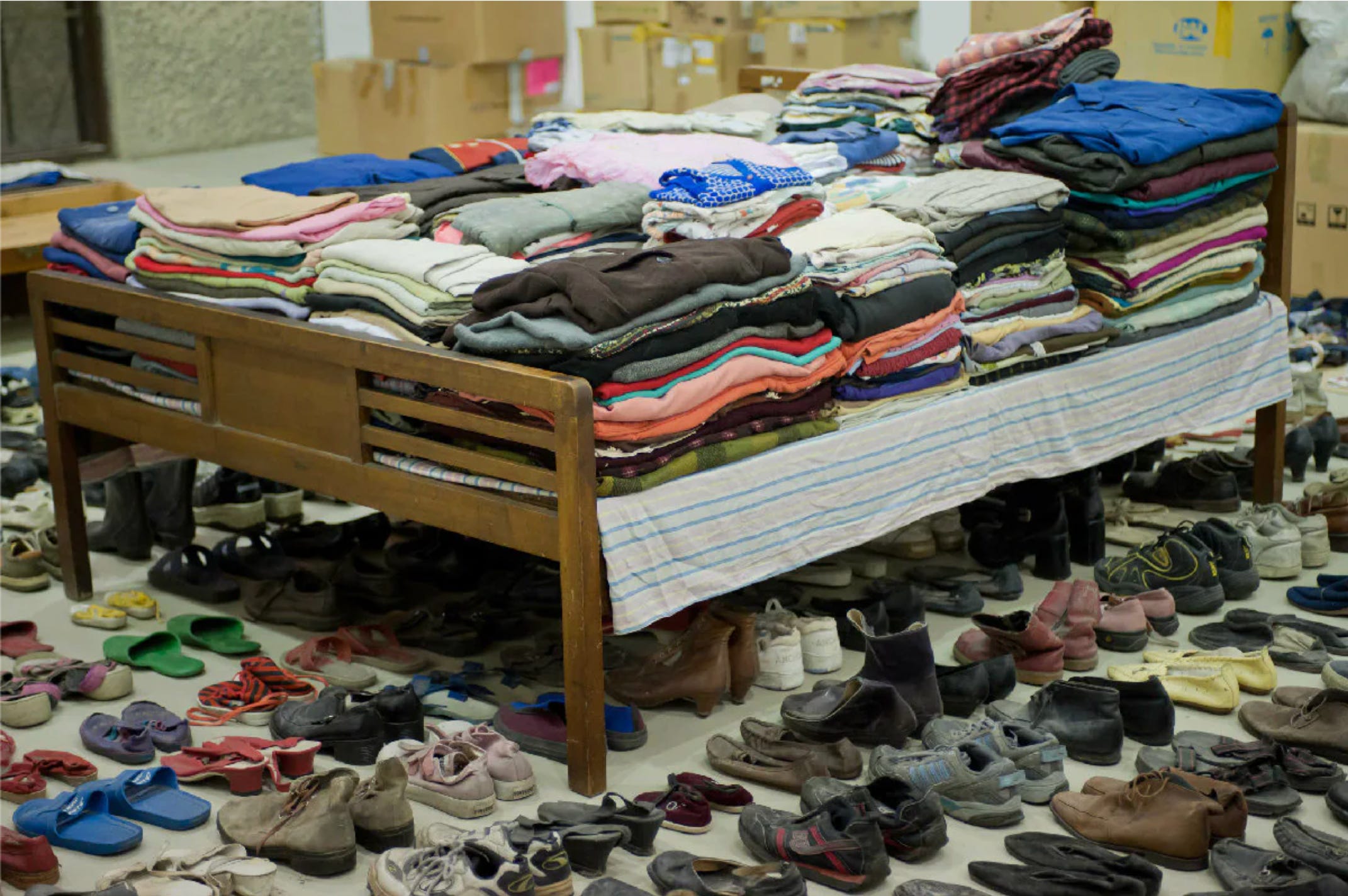
The acculumulation of things continued even as we lived in periods of surplus. Storage spaces became ubiquitous, so much so that TV shows and dramas have been created around them. Our houses are not big enough to hold all our things, so we must pay to have someone else hold our things for us.
The 2000s brought home shopping channels, fast fashion, which has increased our clothing consumption practices by a whopping 400%. There was a new emphasis on quantity - buy more for less! - and what was lost was durability and permanence. Essentially that stability my mother craved. Hoarding became an official mental disorder in 2013.
Social media influencers pushed “micro-trends” in our faces and lulled us into a sense of needing things, and then having to manage our things. In Life at Home in the Twenty First Century: 32 Families Open Their Doors, UCLA Anthropology researchers found staggering amounts of things inside people’s homes. The 2012 book reported that people were forced to live in less of their space because clutter and the storage of things were priotitized over actual living. The research found that mothers in particular were stressed out by the levels of goods they have to move around, store, organize - it’s notable that fathers were not stressed by mess AT ALL - and that piles of unorganized things made the mother’s lives more stressful. There was, for the women, often a great deal of shame around unorganized possessions.
Today, the explosion of social media platforms has transformed consumerism into a constant "attention economy" feedback loop where users are influenced to chase micro-trends. Everything feels urgent and necessary. Amazon and Uber bring your groceries and purchases to your front door, sometimes within hours, and everything is a click of a keyboard away.
Have a little to much wine, or have a moment of weakness, and the next thing you know, new things are arriving on your doorstep to give you a dopemine hit, whether you need them or not. You will then be required to weave them into your larger collection, while continually having to curate and manicure the hoard.
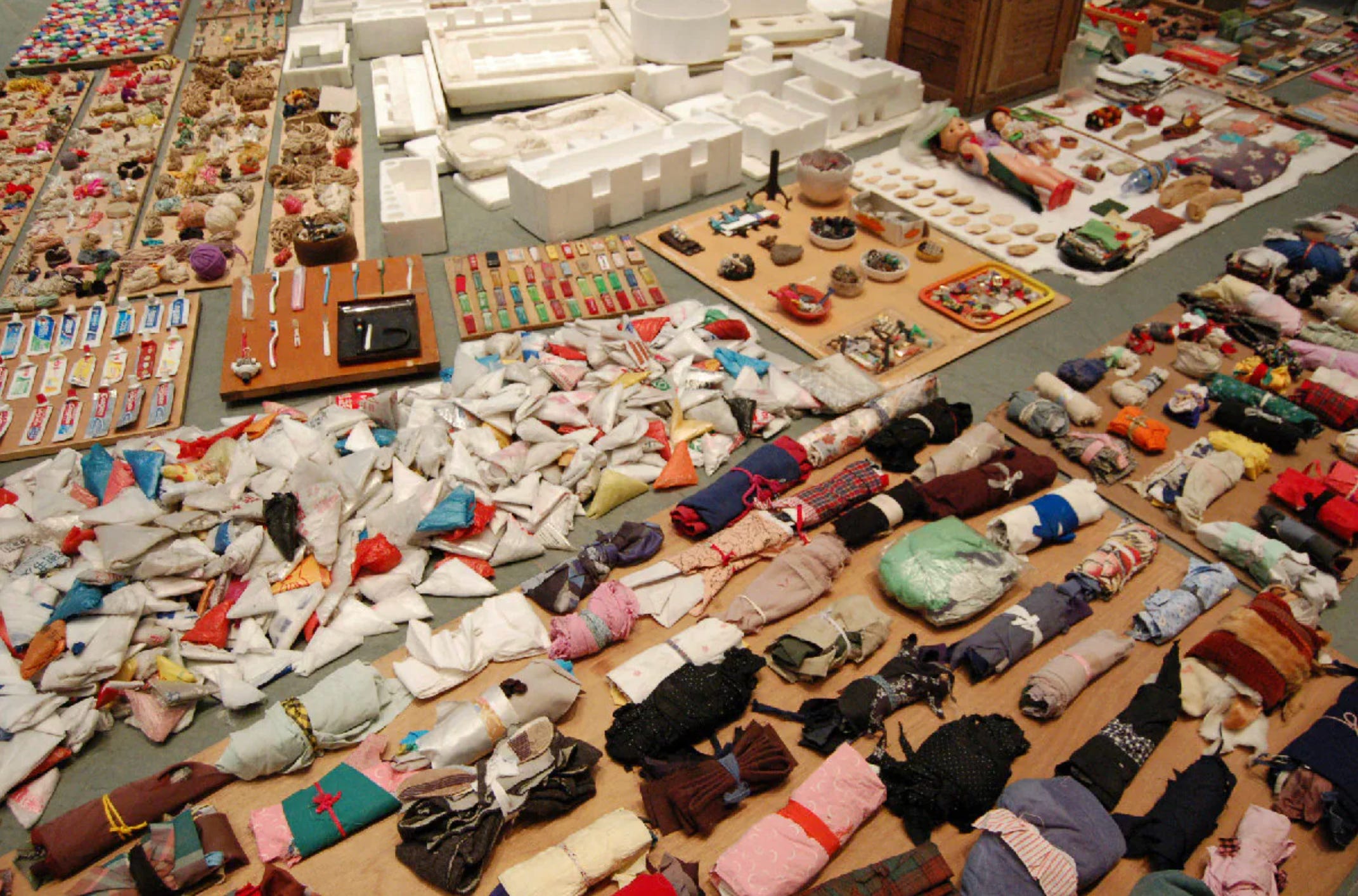
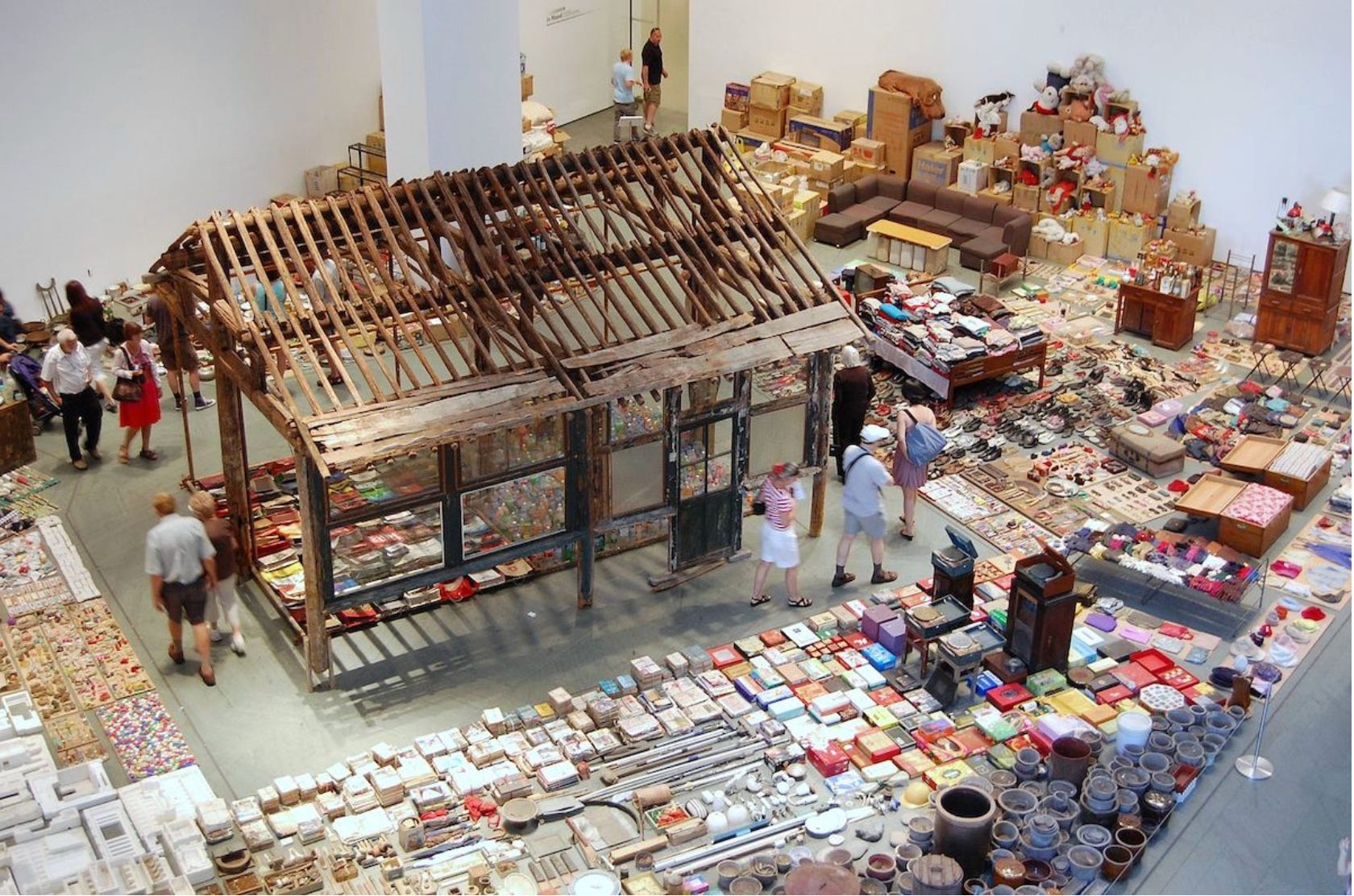
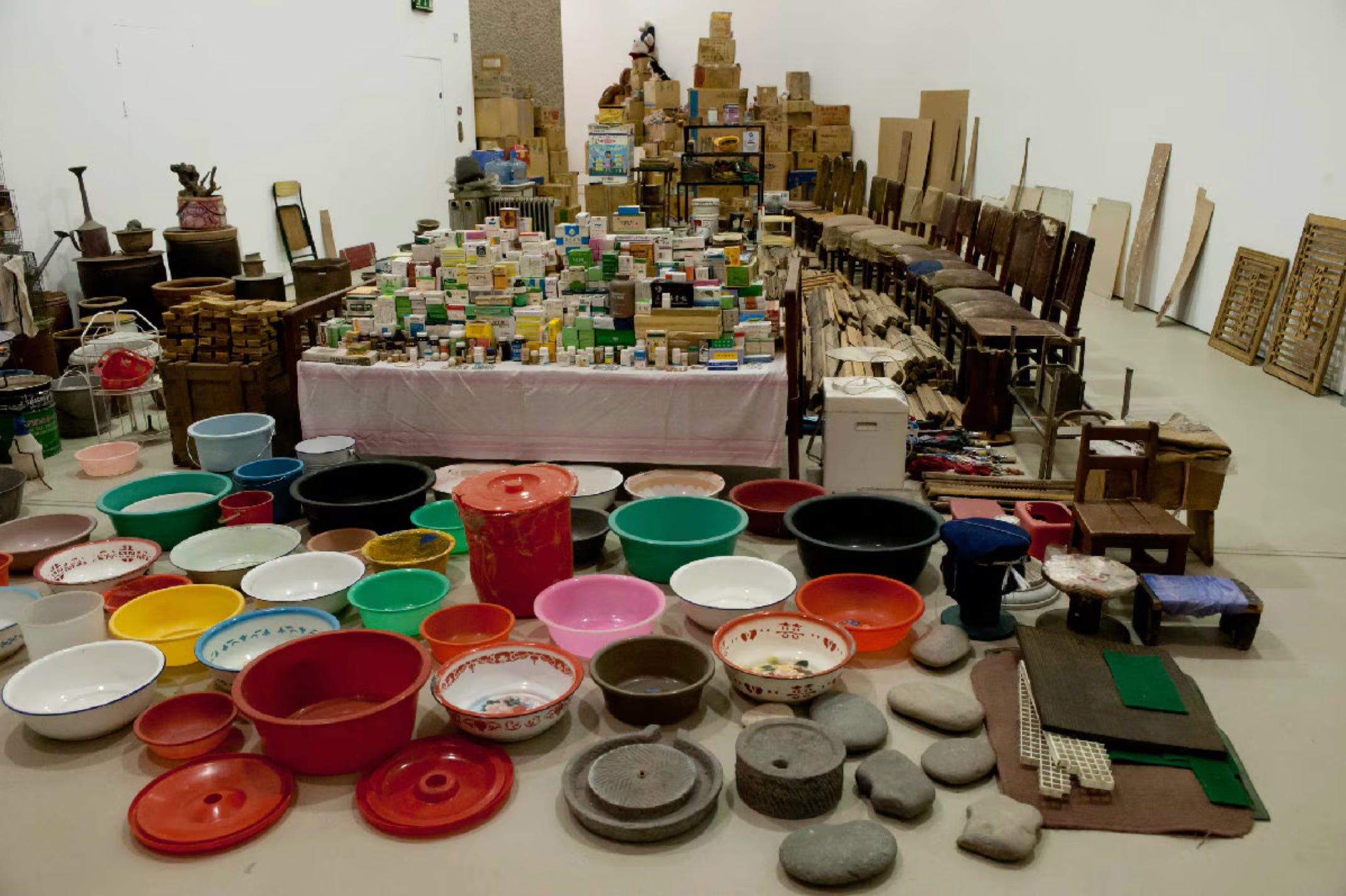
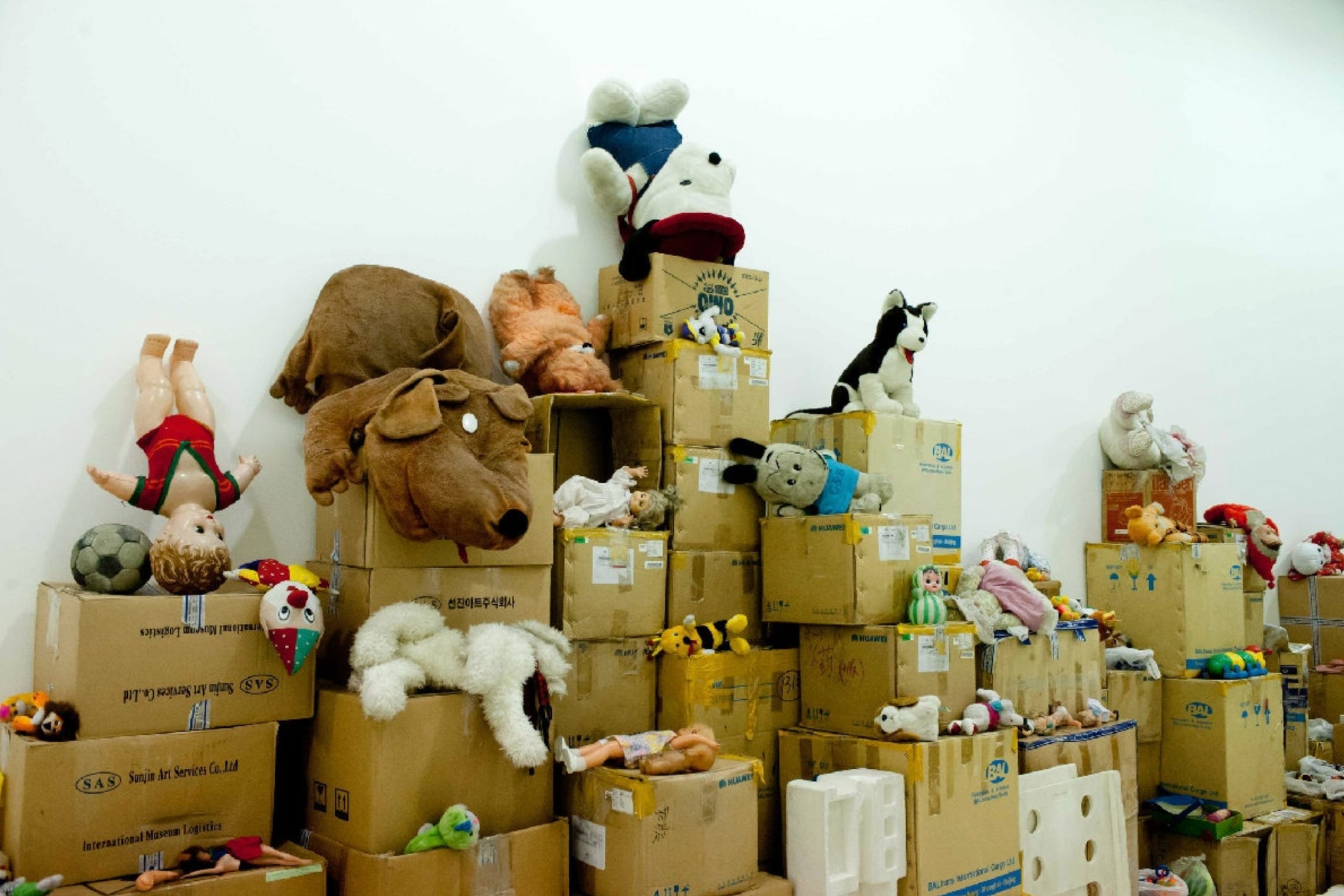
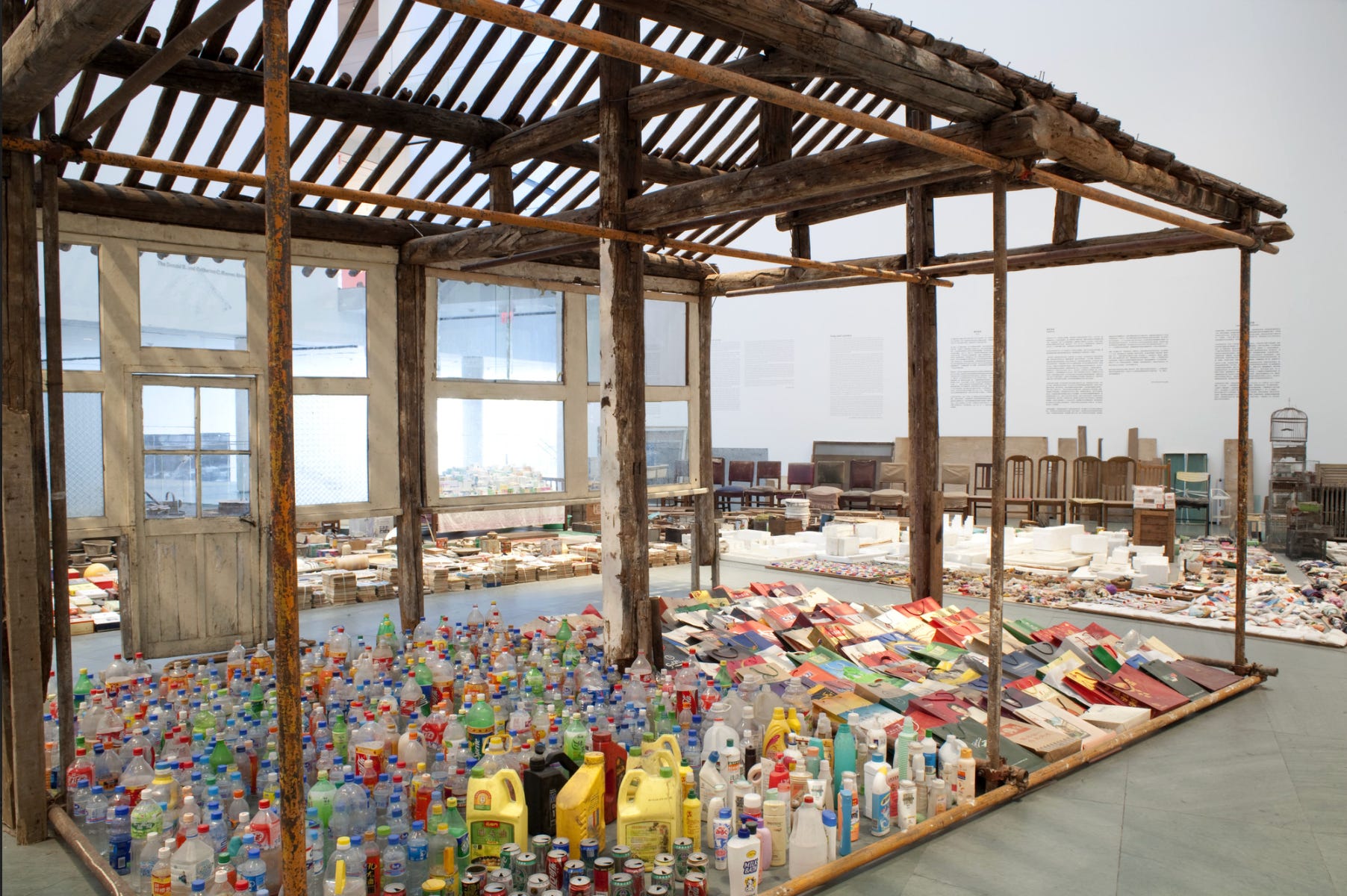
I chose, for this piece, the art of Chinese artist Song Dong, who created exhibitions with his mother, Zhao Xiangyuan. Like my own mother’s poverty and dysfunctional childhood, which led to her intimate connection to her things, the artist’s mother was equally in an intimate relationship with her possessions. In the 50 years of cultural revolution in China, she saw her husband and her father arrested and imprisoned with millions of her fellow citizens. There was extreme scarcity, poverty and loss.
She didn’t want to have an empty room, the artist said in an interview, because my father was not there.
The act of collecting things, and living a life with many objects, is a subconscious attempt to right the scarcity of the past. The experience creates the need for things, while also creating the urgency to keep them, and the inability to discard get rid of them. These are very powerful drivers.
Scholar Anne Anlin Cheng, English professor and distinguished Yale scholar, sees this often in immigrant families who have experienced terrible loss, and who hold onto relics of the lives they’ve left behind. She calls it living in Objecthood, which is a larger theory about how women of color, namely Asian women, exist as individuals and also ornaments (objects) of their culture. They are themselves as individuals, and also “porcelain wares, the china doll, jade, silk, and beauty products…” and objects that signify a perception of their lives.
But intrinsic in this for Cheng is also the connection between humans and objects themselves and how they are interconnected. Cheng sees the collection, and even extreme hoarding of material things, to represent a kind of inherent sense of invisibility that is made visible with all the objects. The invisible person collects objects, one at a time, managing them, moving them, working around them, piling them up, in a kind of silent, private ghostly existence that allows them to hold onto the past, while also allowing it to continue to torment and haunt them.
“Sometimes, disposable lives find themselves through disposable objects,” Cheng says.
This reframing is useful. Is it possible that people who struggle to throw things away, after they’ve used up their value, are also people who are less likely to throw away real people that are perceived as having used up their value? Is the sense of deep empathy transferred across humanity to physical objects? These folks, for Cheng, are giving grace to things that have been assigned obsolescence. They are some of the most feeling and empathic people on earth. Collecting, hoarding, over-consuming and keeping, then, becomes a response born out of empathy—“saving” as an act of grace. An opportunity to reclaim our memories and experiences as valid and worthy.
Keeping things can also represent a kind of comfort for people who struggle with human interaction and social expectations. Japanese author and TV host, Marie Kondo, who brought her KonMari organizing method to the States in 2011 admitted to her strong preference for things over people and how that defined her:
Because I was poor at developing bonds of trust with people, I had an unusually strong attachment to things. I think that precisely because I did not feel comfortable exposing my weaknesses or my true feelings to others, my room and the things in it became very precious. I did not have to pretend or hide anything in front of them. It was material things and my house that taught me to appreciate unconditional love first, not my parents or friends… I can think of no greater happiness in life than to be surrounded only by the things I love.
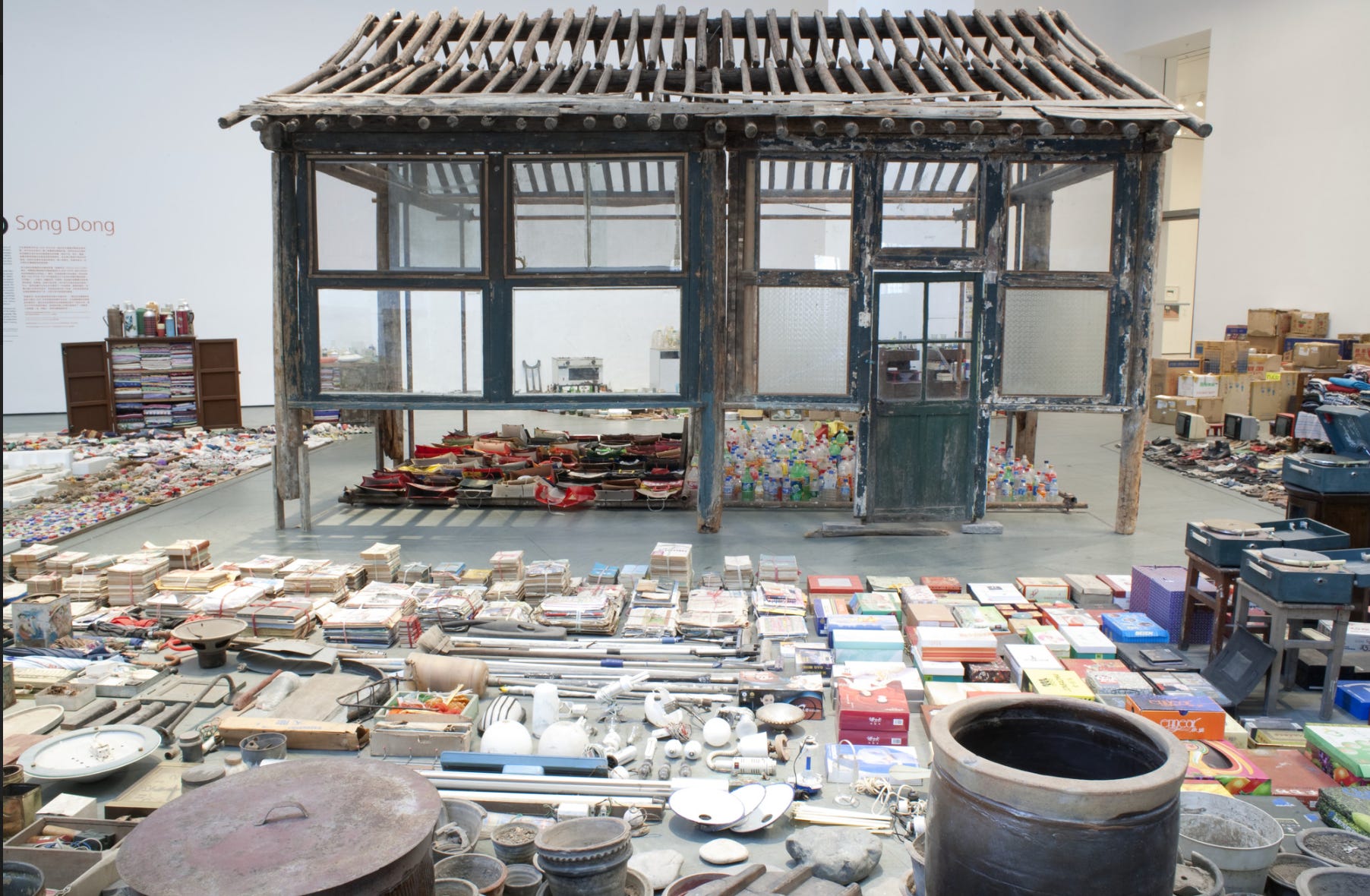
Writing this essay, I, too, have been able to reframe the day I saw most of my mother’s physical possessions cluttered, disturbed and strewn around a gutted apartment. They mattered to her, always, but in these last stages of her life, her things also tethered her to the physical world. Losing them, move by move, piece by piece, were losing herself, piece by piece. The losses were little deaths. Physical signifiers of her aging, and her fears, as she moved relentlessly toward death and decline.
Once, someone from the nursing home had re-purposed a lamp of my mother’s in her office. Mom had seen it. She told me about it nearly everyday on the phone. She was furious. She created an elaborate story about this worker stealing from her. I had given it to a nursing home worker for her office, since my mother didn’t need another lamp in her new room. I didnt think she’d see it or remember it. But I under-estimated her. Everytime she walked by the office, the lamp was a reminder of one more lost thing in a series of devastating losses, the loss of her cognition, loss of her mobility, loss of her car and independence, loss of her daughter to distance, both physical and emotional, loss of her health, loss of her autonomy, loss of her only life partner, loss of her friends, loss of control, and the loss of her visibility and usefulness, her meaning in the world. The lamp was kind of a recognition of how her life, which she curated and controlled with stunningly detailed oversight for decades, was falling apart in front of her.
My mother never knew what became of her things back at the apartment. I lied to her and told her that I was sending everything to my house, across country to sort through. I lied to her because I lied to her about almost everything, because that was how we communicated. The truth, for mom, was always painful and jarring, whether she was speaking it or hearing it, so we avoided it. We loved each other so much as to not ever tell each other the truth.
To put your things in order means to put your past in order, too, Marie Kondo said.
The floor of the apartment was as messy, distressed and all-encompassing as our relationship. Cluttered. Hard to sort through. Private. Full of misplaced love. The things strewn around the apartment mirrored us perfectly. It mirrored me, because I missed her and wanted to escape her all at once. I was the mess.
I hope she can forgive me. I’m starting to forgive myself.
Thank you, as always, for reading. xo Kim

Bloody hell. This gutted me. I have no relationship with any of my siblings, mostly because of how things went with the things of my mother’s, the things they fought over, grabbed, slipped into pockets so no one would see or stuffed into a van stripped of its seats so more stuff could be crammed inside. I just wanted to lie down in the scent of her clothing, to remember the nights that she dressed up to go out, wearing those earrings, to touch everything so I would be sure to have touched the last thing she’d brushed her fingers over before she disappeared into the story of her dying. Thank you for this, Kim. Still weeping….
fuck. My mother, and father, died in 2008. It took 8 years to clean out her house. Because she never let go, becasue more than 3 of anything was a "collection", because she hid important things, because every "thing" had meaning and use and stickyness. And because both my brother and I suffer from that affliction. We know it and it is a battle that never yields. I clean and sort and toss EVERY DAMN DAY. It frightens me to imagine leaving my stickyness for my daughter to clean up. Last week I cleaned out one of my garages, sorted tossed and filled trash cans and bags. It was good and made me feel lighter. Then I saw the tote lingering in the corner, and said "today I can toss all of this." I have not looked at that tote in over 2 decades. It holds the final detrius of a life that ended in 1992. Is it mementos of a love well lived? Is it evidence of a life too soon lost? I dunno. I closed it up and left it to sit on the shelf.