

Lay Down with Dogs, Get Fleas.
And other myths from the white American middle class.


This is a story about Horace and Pat.
They came up into adulthood as Roosevelt’s New Deal officially ended this country’s time in war, and gave white people a leg up and out of generational poverty.+++ This had to feel miraculous after two world wars and a catastrophic depression. Horace was born rural poor, one of six siblings. They hunted and farmed to put food on the table. His father was a carpenter. Pat was small city poor. Her father owned an insurance business until his drinking drove it into the ground. Out of a precarious alcoholic childhood, all she longed for was control.
This period offered much in the way of safety nets that people never really had before. This where we see investments in new public works jobs that paid decently, social security for the old, unemployment benefits, federally-insured bank accounts, investments in infrastructure like parks, dams and schools, pensions, retirement accounts, Christmas clubs to save for the holidays, and long-term loans (for whites) that made home ownership less risky and manageable for regular folks.
Horace and Pat met in highschool. They fell madly in love. They married. They saved their money - they were good wth money - and bought a small house. Horace fought in Korea with the Marines. Pat worked in the payroll department at the local shirt factory. She made the mortgage payments and tended to the house. Horace, home from service, went to work at International Paper Company, a paper mill that made glossy papers for magazines, like Playboy. He started sweeping floors and driving trucks. He joined the union. Eventually, through the years, he worked himself into upper management, without a highschool diploma.
Eventually, after a long painful wait, they had a child. They bought a bigger house in a small country town closer to the mill and with better schools. Horace had his father’s carpentry skills and was able to do all kinds of home improvements on his own, including, later building their retirement house.

They sent their daughter to public school. Pat used green stamps and coupons. Horace was a volunteer fireman. Pat had a Brownie troop. They were frugal, but were generous when they could be. They were, like almost everyone from that town, shirt off their back people. They had money in a passport savings account, and invested in the safety of bonds, IRAs and CDs. New cars (not too flashy or foreign) every few years, a public sign of upward mobility.
Pat was a solid cook, but she didn’t care for the European fanciness of Julia Child. She couldn’t have procured the ingredients in her small town anyway. And Julia offended her blue collar sensibilities. Pat didn’t want to be tied to the kitchen. The times were changing and women had birth control and abortion. They had their own lives and aspirations. There was talk of liberation and a push to make the ERA law. (The Equal Rights Amendment is STILL not part of the constitution) By the 80’s she was using prepared ingredients, TV dinners and sugary cereals. Chocolate pop tarts were considered a perfectly fine breakfast.
When Horace’s garden was hitting it’s stride in July and August, there were warm tomatoes and white ears of corn. Lettuce sandwiches with mayo on Wonder Bread. In hunting season, deer carcasses hung in the garage, and meat was shared through Horace’s hunting club. There were always guns in the house, carefully locked away. But Horace abandoned the NRA when the organization stopped being about sport and became radicalized around semi-automatic rifles.
They took vacations, mostly in cross-country car trips, and had a travel trailer they could retreat to on the weekends and the summer. The camper sat on the bank of a river. They had cocktail hour at 4pm everyday there, with other adults on the river. Cheese and Ritz crackers, high ball glasses with Canadian Club and ginger ale. They sent their daughter to college. They proudly paid for it so she didn’t graduate with debt. She was the second child in the family to go to college, the first girl. They were proud.
Along with Black is Beautiful slogans, TV commericals about bringing home the bacon and frying it up in a pan, and Billy Jean King kicking the shit out of Bobby Riggs on the tennis court, the most enlightened people were expected to treat everyone the same, like a Coca-Cola commercial. Gay people were mostly closeted and off the hetero radar. No one asked why the French teacher, Mr, Bartholomew lived alone and never married. There were few charities outside of the Red Cross, because almost everyone in Horace and Pat’s small town, with its single blinking stop light, all had the same stuff, socio-economically. More or less. And everyone fed everyone else’s kids anyway.
Poverty, and its otherness, was a long ways away, reserved for UNICEF orphans, after-school specials, far-away inner cities, and the local mountain people, an outpost called Allentown, written about in the New York Times back in the 90’s. Multiple generations of Allens lived mostly without elctricity and water, deep in the woods. They stay to themselves, Horace often said. They never hurt nobody. They take care of each other. Horace mingled effortlessly with country folk and his more educated bosses at the mill, a skill required for upward mobility.
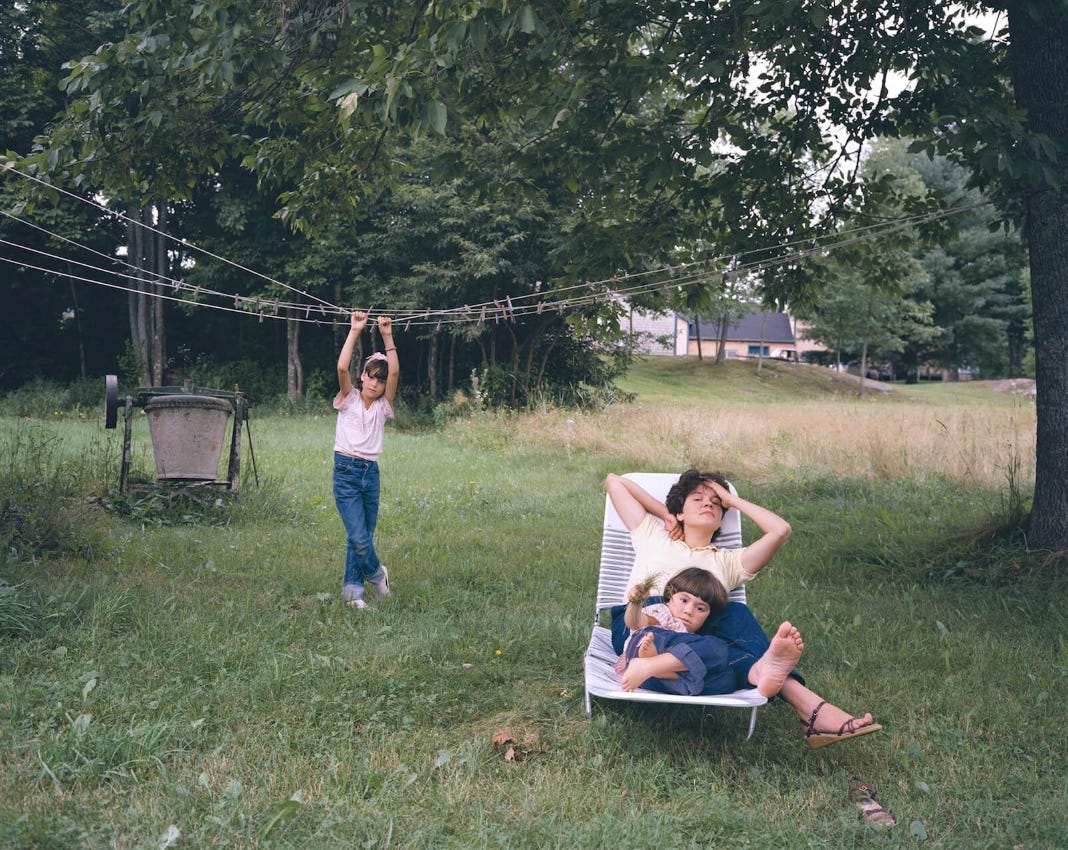
Horace and Pat exceeded their goals and dreams.
The expectation was that their child would do better than they did, and that her children (if she had them, and why wouldn’t she?) would continue to prosper in ways that seemed limitless and ever-expanding. The feeling of the 60’s and 70’s, moving into the 80’s was that a kind of utopia had been created. Yet, Horace and Pat were still blue collar in how they looked at life. They had proximity to poverty. They had kin still stuck in mobile homes and persistent, dysfunctional crisis - drinking away paychecks, popping their wives in the mouth, cheating with the girl at the lumberyard, needing to borrow money, doing a night in the drunk tank after a bar fight. Horace and Pat knew that what got them to this secure place was solely of their own making.
Horace and Pat were guided in life by one particular saying: Lie down with dogs, get fleas. The difference between them and people who weren’t doing well was that they had 1) worked extremely hard and made good choices, and 2) they never ever ever rocked the boat. Pat and Horace never had a traffic ticket, never owed money (except for their first mortgage), never paid a bill late, or put things on lay-away, bought something they couldn’t afford, never cheated on their taxes. When they had an opportunity for Horace to leave the mill, to take over a successful business building homes, they turned it down. They wanted a weekly paycheck, pension and the security.
They never laid down with dogs. They never got fleas.
They had escaped poverty, and like their neighbors with nicely painted houses and tasteful holiday decorations, they wanted it to stay that way. No fleas. Horace and Pat, and many others of this period, had what author Barbara Ehrenreich described as a Fear of Falling out of the middle class.
The implications for this are with us today.
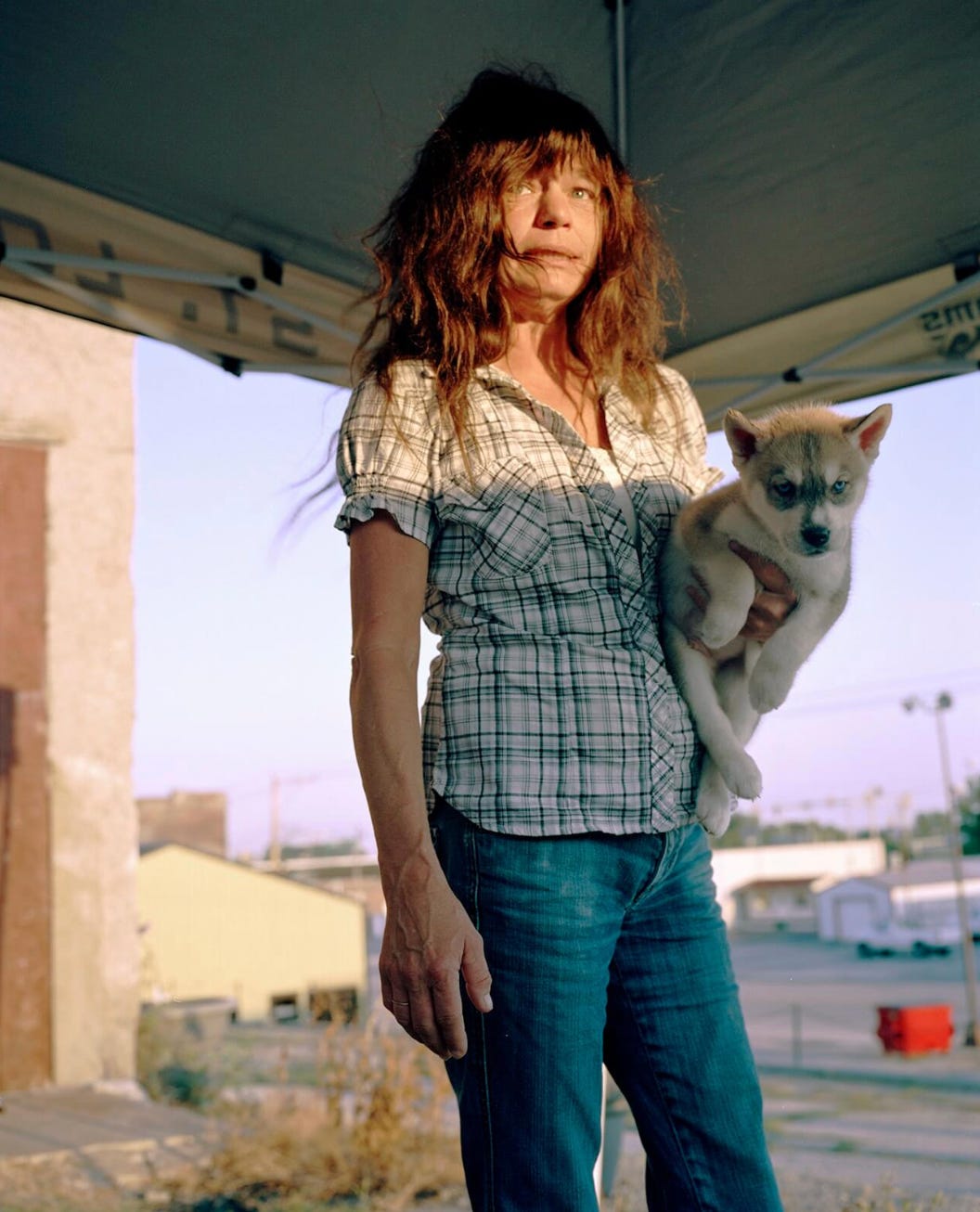
In her book, Fear of Falling: The Inner Life of the Middle Class (1989, Pantheon), Ehrenreich writes that this mid-century middle class - albeit largely blue collar in vibe and sensibility and aways with a chip on their proverbial shoulders - created a bubble of perceived abundance. Horace and Pat, and their neighbors, set their sights on being more like wealthier people than the poverty they came from. Pat and Horace started socializing more with Horace’s superiors at the mill.
This socio-economic comfort helped produce a consumerist culture that was hoping to deplete people of their disposable cash and help them chase affluence. Movie theaters, malls and department stores popped up, along with highway systems that connected rural to urban, suburb to city. Pat went shopping to cure the boredom. Retail therapy, as a concept, was born.
Suburbanization, Ehrenreich wrote in Fear of Falling, probably more than any other single factor, hid the poor from view.
By the time Reagan came into office in the 80’s, there was a full-scale war on poor people. The middle class was invested in staying in their bubbles of abundance. They abandoned liberalism for conservatism. Horace and Pat bought everything Reagan had to sell. They had gotten where they were because they took individual responsibility not because they benefitted from a system that supported them, through entitlements and safety nets. They, like Reagan, believed welfare programs baby-ed people, discouraged them from hard work, and created dependency that made the poor seem like immature, petulant children who needed austerity and consequences to get their lives together.
Liberalism was a bad word. Common sense, a nod to the working class and a slam against the college-educated, management class, was in vogue. Reagan deemed college a vehicle for social unrest. In California, as Governor, he slashed financial aid and increased tuition. Rush Limbaugh was syndicated nationally by 1988 and Bill O’Reilly was on Fox News. This is the point where many of us lost our elders.
As president, Reagan attempted to cut social security and increase the retirement age (not popular). He cut Medicaid, food stamps, employment training programs, and financial aid to college students. He cut taxes for the rich. By the time Clinton took office in 1992, even Democrats wanted to curtail entitlements. Clinton authored the Personal Responsibility and Work Opportunity Act in 1996, which he believed ended welfare as we know it.
More and more, Horace and Pat were convinced they controlled their own destiny, that everyone had the same start, the same free will, the same bootstraps by which they could pull themselves up, that anyone could do anything if they just worked really really hard.
If they never got fleas, it was because they never laid down with dogs.

I started thinking about the dogs and fleas talk a lot this week after the shooting of Renee Good by an ICE officer in Minnesota. I heard it over and over in various forms online. If she wasn’t there protesting, she wouldn’t have gotten shot. If people don’t want to get shot, then they shouldn’t resist.
These statements, of course, can be manipulated to show their true foolishness. If you had cooked me the dinner I wanted, I wouldn’t have had to punch you in the face. If women just did what they were told, they wouldn’t get raped.
But it also belies a more ingrained cultural and capitalistic belief that permissiveness, a term Ehrenreich uses often in her book, is okay for some people, like tech founders and the billionaire class, because they are producing, creating, innovating and disrupting. They can take chances, do shady things, hang out with pedophiles, be pedophiles, behave badly, cheat on their partners, avoid rules, work around laws, employ shady ethics, and gain pardons and passes for poor and illegal behavior.
They are allowed to lay down with dogs. They won’t suffer the consequences.

Permissiveness is not acceptable for everyone though.
Immigrants who cross the border illegally are not allowed permissiveness. They enter as criminals. They are called rapists. They are dangerous. The worst of the worst. They do not deserve due process. They deserve to be plucked off the streets by masked gangs of men. Their existence is messy and worthy of harrassment. They have earned CECOT, and whatever their fate may be.
Fleas.
Permissiveness is not okay for the poor, mentally ill and disabled, whose lives are complicated and inexplicable to most of us. They are eating lobster tails on America’s dime. This includes the working poor who should be able to do what Horace and Pat did two generations ago. Didn’t Horace work his way up from sweeping floors? Except we pulled the ladder up from behind people years ago.
Fleas.
Permissiveness is not for Black and brown people, whose parents and grandparents most-likely missed out on the benefits of The New Deal, but are often punished and criticized for not achieving more. Their experiences happen outside of white experiences. They are not allowed the same kinds of leniency.
Fleas.
Permissiveness is not for protestors who see extreme government overreach and want to protect their neighbors, their schools and their communities from ill-prepared, armed, masked men. They are at fault for anything that happens because they show up. Because they are using their constitutionally-protected voices. Of course, some protestors get permission, like the ones that showed up armed on January 6th.
Fleas.
Horace and Pat have both passed on. They wouldn’t recognize the world these days. But that’s just the superficial world, our onlineness, AI, all of us bumping up against each other on social media. In reality, things are less hidden now. The corruption is out there. The poverty is out there. The billionaires are out there. The lawlessness is visible and oh so public. The hate is out there. But so is the bravery, the dissent, and the rebellion. There are no suburban and small town utopias to make us docile and complacent. All we have is our hell-raising to make sure that next time, we leave no one behind.
Thank you, as always, for reading. Kim
____________
END NOTES:
Happy to be back with all of you. A few notes from the text:
+++ Black and brown people were left behind in the New Deal. This was by design, according to the Rockerfeller Foundation: Black and brown workers across the country were systematically excluded from key programs like Social Security, protections afforded under the National Labor Relations Act, the Home Owners Loan Corporation and the Federal Housing Administration, the last two, which promoted racial covenants and other instruments of segregation by refusing home loans for black and brown families.
If you’re interested, I suggest reading this 2014 piece by Ta Nehisi Coates, The Case for Reparations in the Atlantic, about the mid-century racist housing policies that kept Black and brown people from participating in socio-economic mobility. It really helped me understand how generational wealth and poverty matter.

This is an amazing piece and exactly what I’ve been trying to articulate. Thank you! I was reading my parent’s lives (and therefore mine) up until Reagan entered the picture. Somehow my blue-collar-auto-workers-union dad and my ERA-sports-playing mom didn’t get that memo. They stayed so cool and liberal. Farm co-op delivery from our garage, recycling in a small suburb of Detroit waaaayyy before it was hip. And at 83 my mom knitted pink pussy hats and wore hers way down at the bottom of Texas! I stand on the shoulders of giants just by chance. It’s infuriating that all the potential of that time was erased by white men terrified of losing their positions.
This is so well written! Thank you. I have shared your words today. And agree with your message.